
$260.00
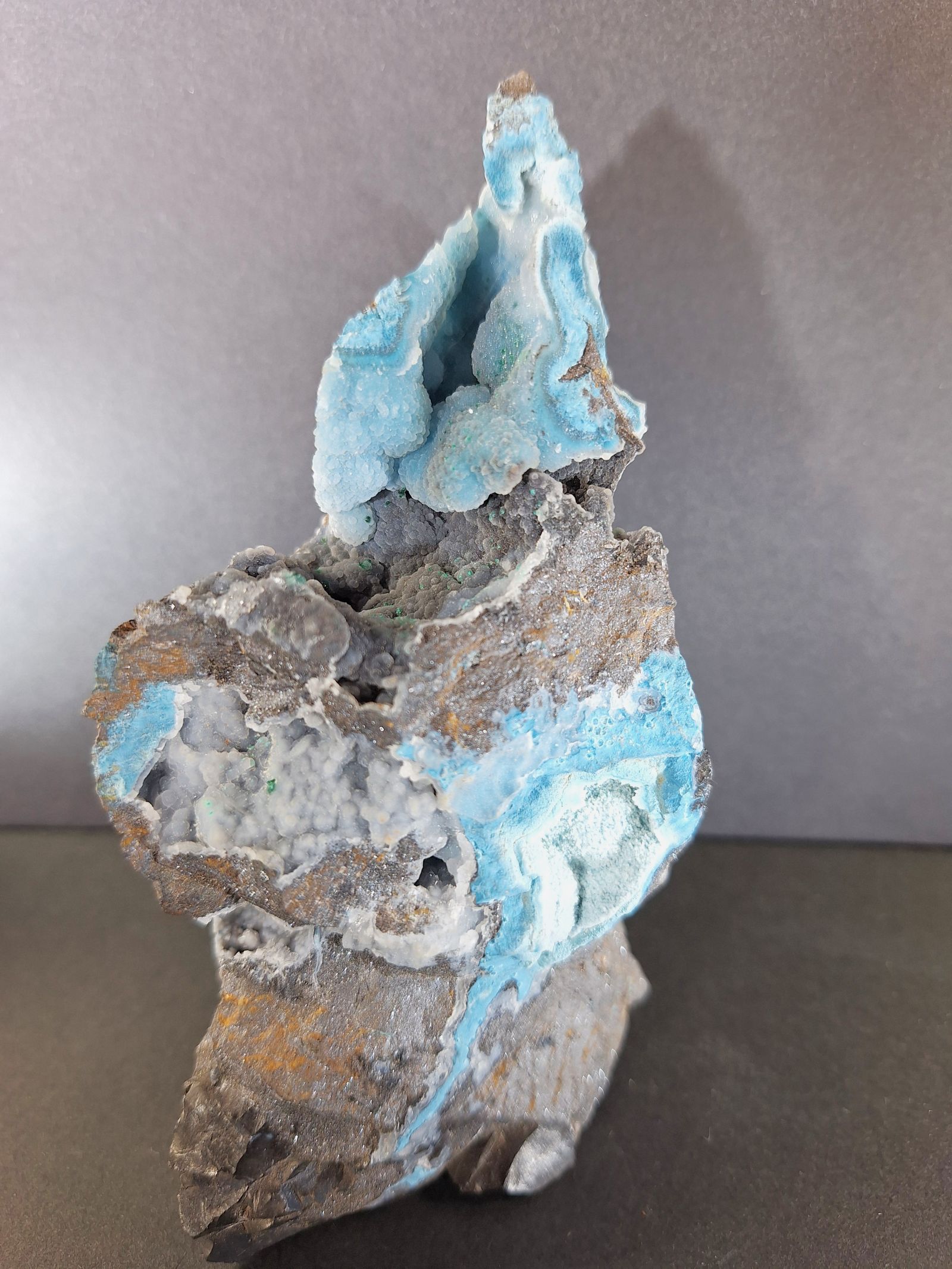
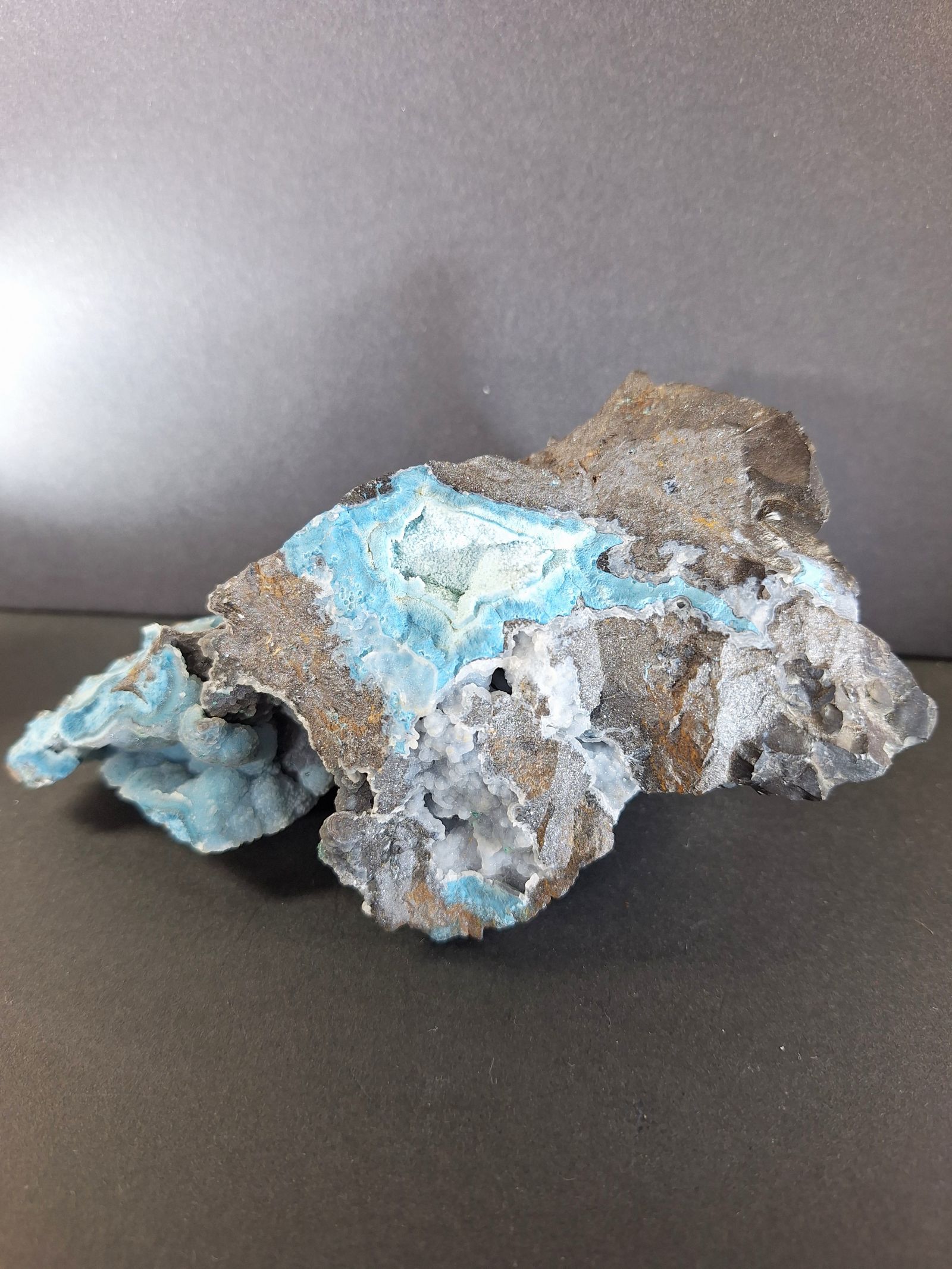
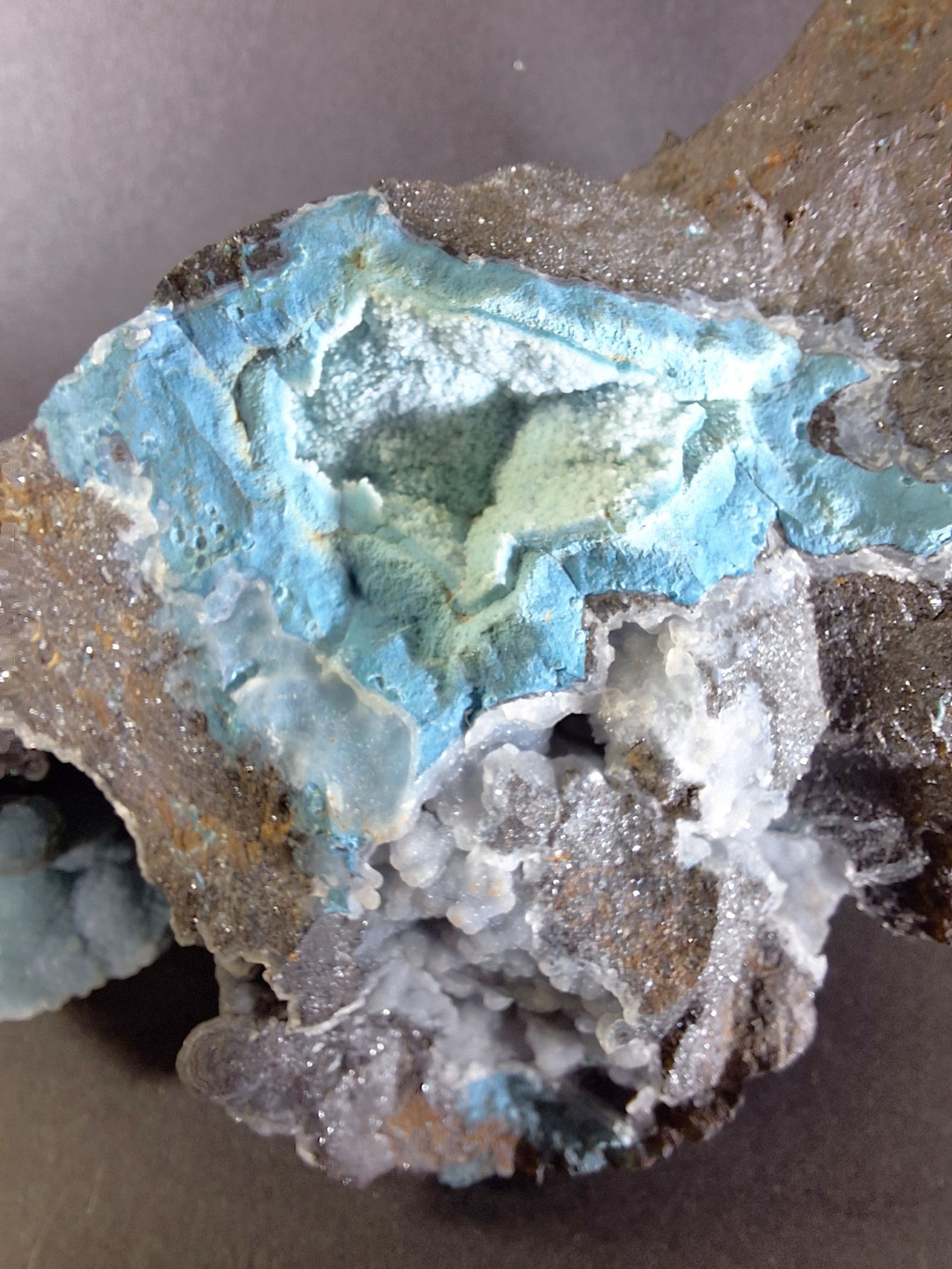
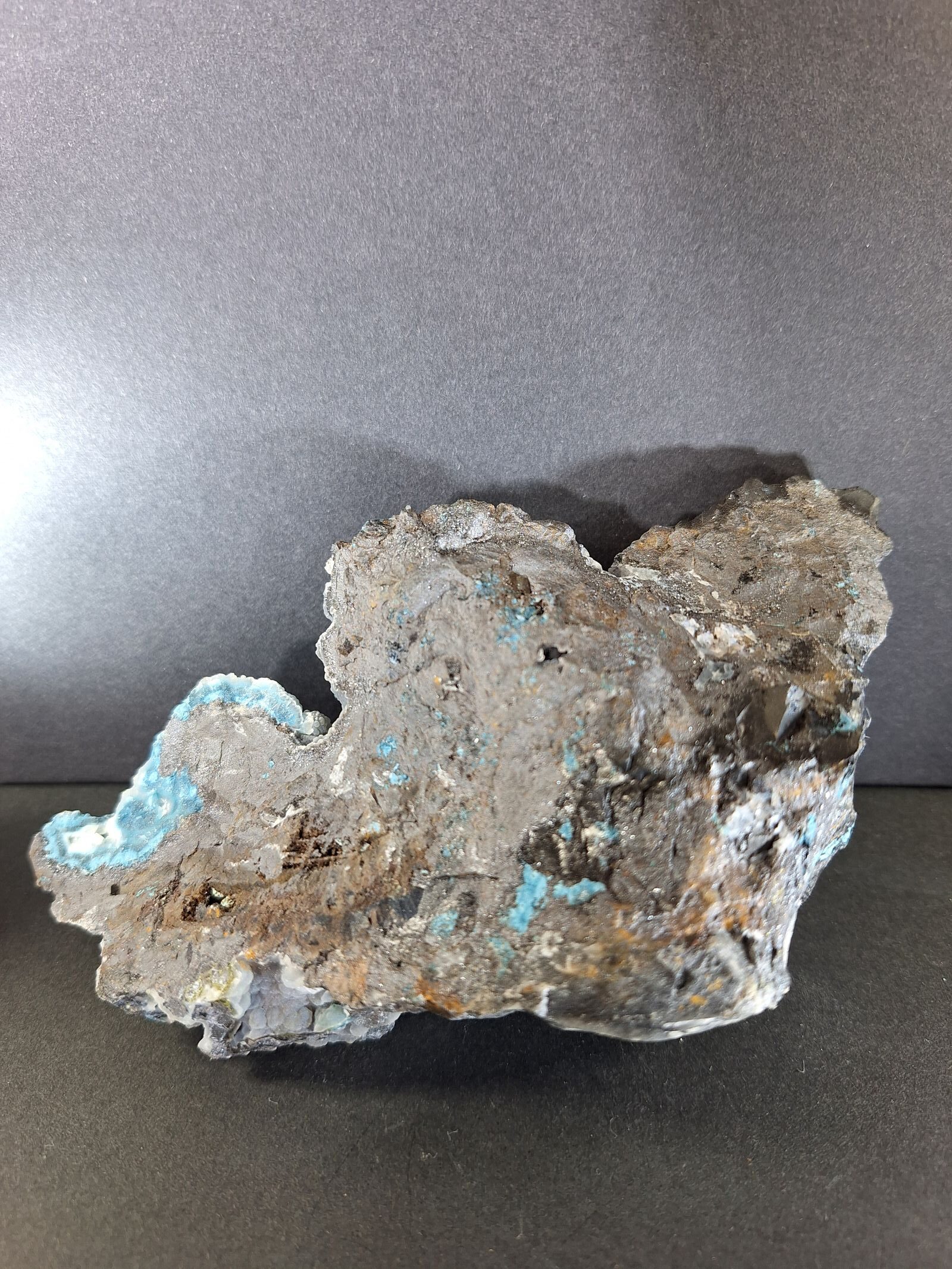
A striking Blue Shattuckite on Matrix specimen from Namibia, featuring vivid powder-blue mineral crusts, pale turquoise-colored bands, and sparkling pale blue-grey botryoidal pockets.
The delicate, rounded mineral formations create a fascinating textured surface, highlighting the natural beauty of this uncommon secondary copper silicate. Namibia is celebrated for its distinctive shattuckite specimens, especially those displaying velvety coatings and intricate mineral growth.
An excellent addition to a collection of Namibian minerals, blue copper minerals, or unusual botryoidal formations.
Origin: Namibia
Mineral: Shattuckite on matrix
Dimensions: 5×2.25×2.5
In stock
You will receive the exact specimen shown.
Carefully packed and shipped from Arizona.
Free U.S. shipping on orders of $70 or more.
An extraordinary display of natural blue mineral formations, this Blue Shattuckite on Matrix specimen from Namibia features vivid powder-blue crusts, pale turquoise bands, and sparkling pockets of pale blue-grey botryoidal growth. Its richly textured surface creates a fascinating landscape of color, with delicate mineral formations that invite closer examination.
Unlike polished shattuckite, which is often fashioned into cabochons and decorative stones, this specimen preserves the mineral in its natural matrix. Its varied textures reveal how copper-rich minerals can develop across rock surfaces, fill small cavities, and form rounded aggregates over time.
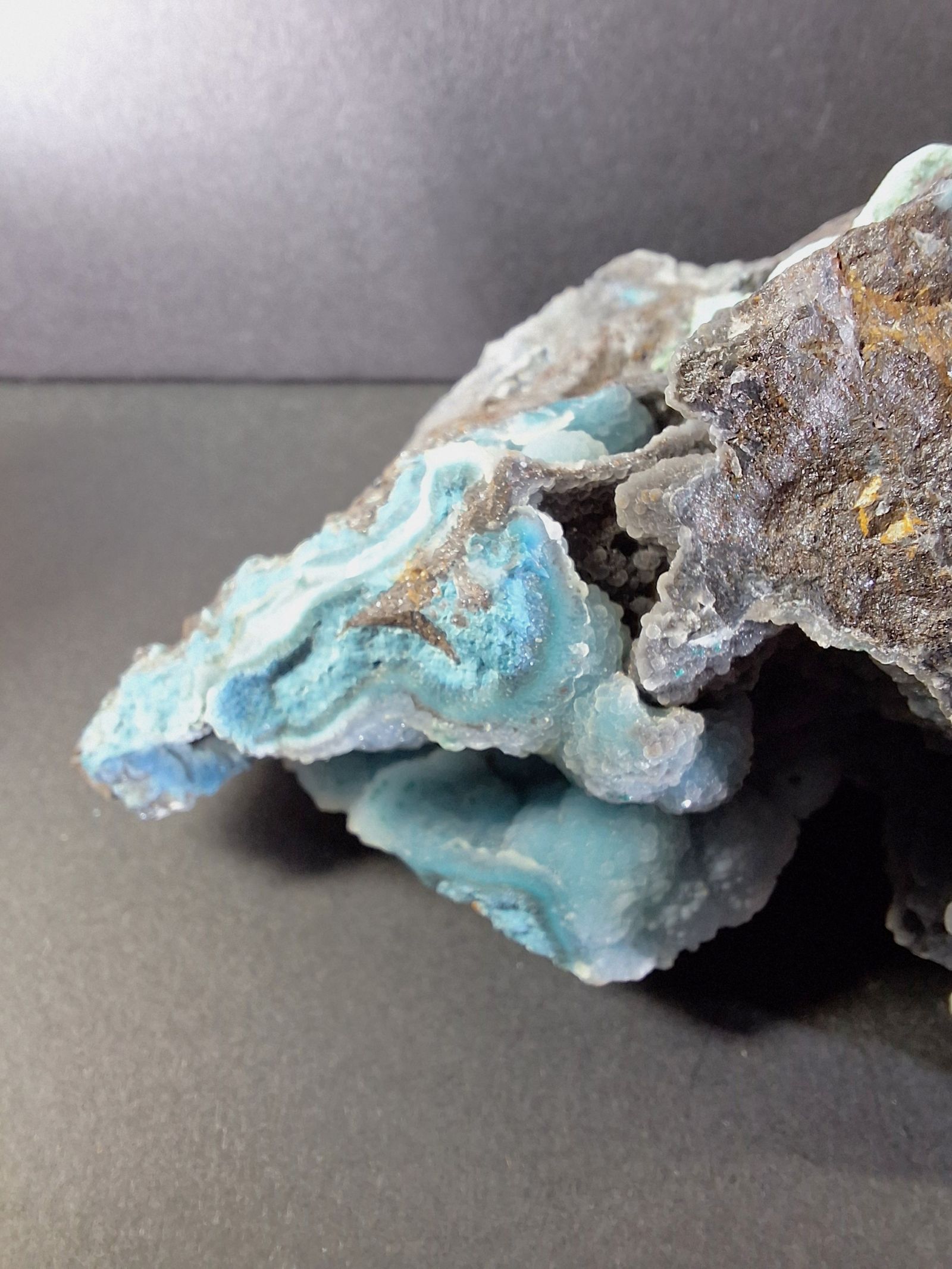
One of the most captivating features of this specimen is its botryoidal texture. The term botryoidal describes rounded, grape-like mineral formations that develop as many tiny crystals grow together.
Shattuckite can form fine, needle-like crystals arranged in radiating groups. When these crystals develop in dense aggregates, they may produce velvety, fibrous, or rounded surfaces rather than large individual crystals.
The pale blue-grey pockets and sparkling mineral textures on this piece provide a beautiful contrast with its more intensely colored powder-blue crusts. Subtle changes in surface structure catch the light differently, revealing details that are easy to overlook at first glance.
The pale turquoise-colored bands add another layer of visual interest, making this a particularly attractive specimen for collectors who appreciate complex mineral growth.
Shattuckite is an uncommon secondary copper silicate mineral with the chemical formula Cu₅(SiO₃)₄(OH)₂. It belongs to the orthorhombic crystal system and has a Mohs hardness of approximately 3.5.
Its beautiful blue coloring is associated with copper in its chemical structure. Shattuckite forms in the oxidized zones of copper deposits, where weathering and mineral-rich fluids transform earlier copper-bearing minerals into new secondary mineral species.
These environments can produce striking combinations of blue and green minerals, including shattuckite, chrysocolla, malachite, plancheite, and other copper minerals.
Although these minerals can occur together, their similar colors and growth habits mean that individual species sometimes require specialized testing to distinguish.
Namibia is internationally respected among mineral collectors for its extraordinary copper mineral specimens.
The remote Kaokoveld Plateau and surrounding areas of the Kunene Region have produced particularly attractive examples of shattuckite. Some display brilliant blue botryoidal coatings, while others feature fibrous aggregates, delicate crystal growths, or associations with quartz and malachite.
These mineral formations develop through a complex history of copper mineralization, oxidation, and the movement of mineral-bearing fluids through fractures and cavities in the host rock.
Namibian shattuckite specimens are especially appreciated for their distinctive blue colors and unusual crystal textures. Rather than relying on a single large crystal, many of the most interesting examples display intricate surfaces composed of countless tiny mineral growths.
This specimen captures that appeal through its powder-blue coatings, contrasting turquoise-colored bands, and rounded mineral pockets.
What makes this piece memorable is the variety of mineral textures visible across its surface. The vivid blue crusts draw attention immediately, while the smaller botryoidal pockets reward careful observation.
The natural matrix adds geological context and gives the specimen a rugged appearance that contrasts beautifully with its delicate blue formations.
It would make an eye-catching addition to a display of Namibian minerals, copper silicates, botryoidal crystals, or unusual blue mineral specimens.
In modern crystal traditions, shattuckite is associated with communication, intuition, personal insight, and thoughtful self-expression. Its blue color has also made it popular among collectors interested in symbolic connections with the throat and third-eye chakras.
These are traditional spiritual associations, not scientifically established health effects.
Care and Display: Shattuckite is relatively soft, and delicate fibrous or botryoidal formations can be damaged by handling. Avoid rubbing the blue surfaces or using water, chemical cleaners, or ultrasonic equipment. Remove loose dust with a very soft brush or gentle air blower. Display on a stable surface where the specimen can be appreciated without frequent handling.
| Weight | 24 oz |
|---|---|
| Dimensions | 5 × 2.25 × 2.5 in |
Only logged in customers who have purchased this product may leave a review.
Reviews
There are no reviews yet.