
Shop magnetic bracelets from Grounded Lifestyles, including 5,000 gauss magnetic bracelets, copper and copper-alloy bracelets, stainless steel designs, herringbone styles, and magnetic bracelets with Tiger Eye, hematite, Turquenite, and other decorative inlays. Our collection includes styles for men and women, with designs ranging from classic copper-tone bracelets to polished silver, gold-tone, and gemstone magnetic jewelry.
Magnetic bracelets combine permanent magnets with wearable jewelry designs. Many of our styles feature magnets rated at 5,000 gauss, along with copper alloys, stainless steel, gemstones, or decorative materials. Product listings identify available materials, measurements, magnetic specifications, and design details so you can compare bracelets and choose the style that works best for you.
People choose magnetic bracelets for many different reasons. Some simply like the appearance and feel of copper or stainless steel jewelry. Others are interested in the long history of magnets, copper, gemstones, and wearable objects within wellness and metaphysical traditions.
Static magnets produce real, measurable magnetic fields, and gauss is a unit used to describe magnetic flux density. However, the existence of a measurable magnetic field is separate from claims about specific health effects. Static magnetic bracelets have been studied for wellness applications, but clinical evidence for specific therapeutic benefits remains mixed and inconclusive.
At Grounded Lifestyles, we believe it is more useful to explain both the physical properties of the magnets and the wellness and metaphysical traditions associated with magnetic jewelry without presenting those traditions as established medical treatment.
Our collection gives you choices across materials, finishes, magnetic strengths, gemstone accents, and bracelet styles without requiring you to sort through thousands of nearly identical marketplace listings.
Look for details such as:
Whether you’re choosing a magnetic bracelet for everyday jewelry, personal symbolism, wellness traditions, gemstone interest, or gifting, compare the individual product specifications to find the material, fit, magnetic configuration, and design you prefer.
All products below are individually selected. You receive the exact stone or lot shown.
Showing all 13 results
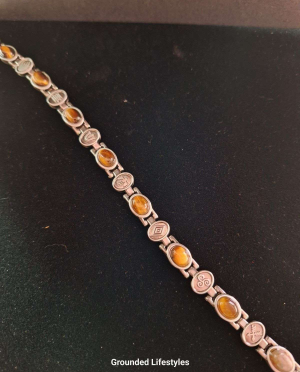
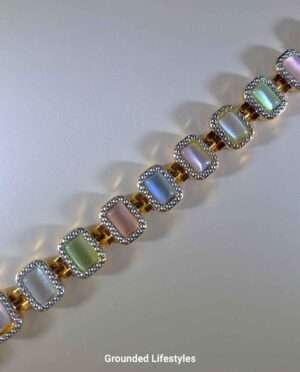
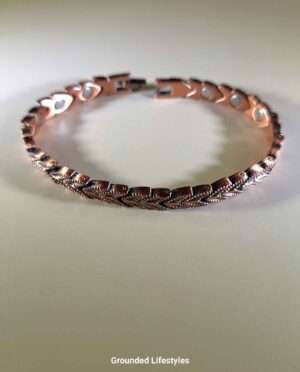
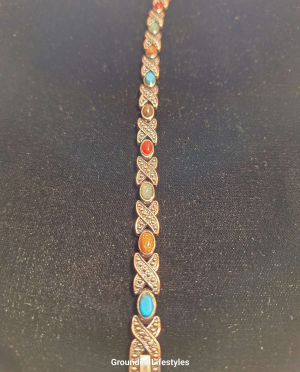
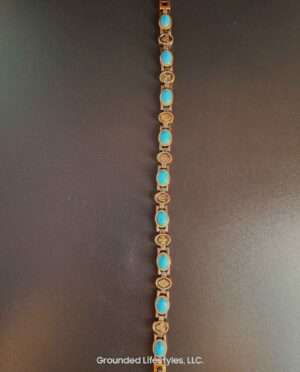
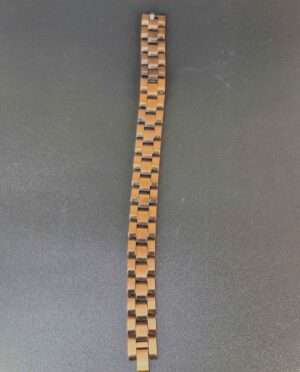
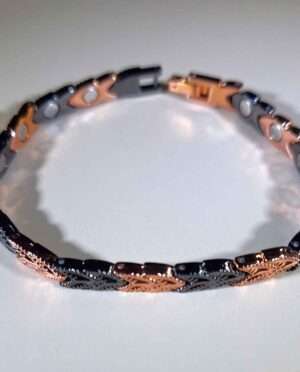
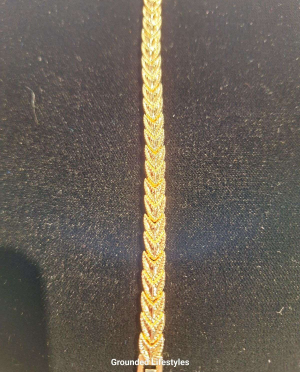
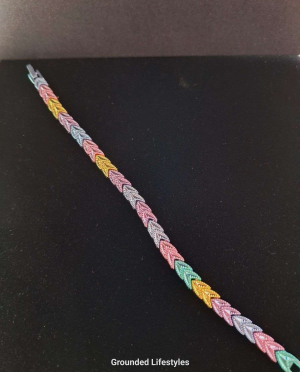
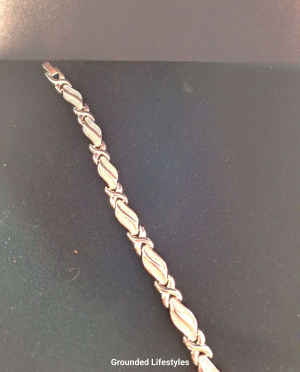
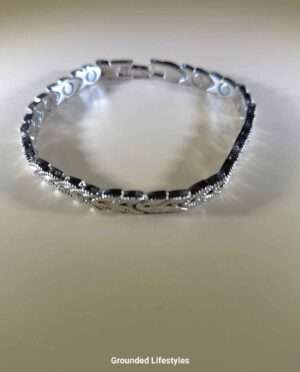
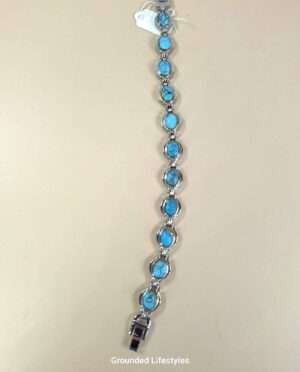
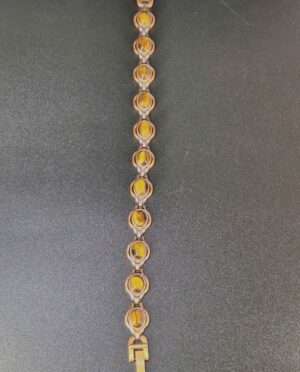
Magnetic bracelets combine jewelry materials such as copper alloys, stainless steel, gemstones, or decorative inlays with permanent magnets incorporated into the bracelet. Depending on the design, magnets may be positioned inside individual links, along the inner surface of the bracelet, or within other components that sit close to the wrist.
The magnetic field is a real and measurable physical property of the magnets. The strength and configuration of that field depend on factors including the type and size of magnet, its orientation, the distance from the magnet, and where the magnetic strength is measured.
Many modern magnetic bracelets use compact permanent magnets rather than relying on the bracelet’s primary metal to produce magnetism. Materials such as copper and most common jewelry-grade stainless steels do not automatically make a bracelet strongly magnetic.
Neodymium Magnets: Neodymium-iron-boron (NdFeB) magnets are powerful permanent magnets that can produce relatively strong magnetic fields despite their small size. They are widely used in modern products where substantial magnetic strength is needed in a compact space.
Magnetite: Magnetite (Fe₃O₄) is a naturally magnetic iron oxide mineral. Naturally magnetized magnetite is historically known as lodestone and played an important role in early observations of magnetism and the development of magnetic navigation.
Hematite: Natural hematite (Fe₂O₃) is an iron oxide mineral that is generally only weakly magnetic under ordinary conditions. Strongly magnetic beads and jewelry marketed as “magnetic hematite” may instead be manufactured magnetic material sometimes sold as hematine or similar trade material. Natural hematite and manufactured magnetic hematite-style jewelry should therefore not automatically be treated as the same material.
Copper & Copper Alloys: Copper itself is not a permanent magnet. In a copper or copper-alloy magnetic bracelet, the magnetic field generally comes from separate permanent magnets incorporated into the bracelet design. Copper contributes the appearance, feel, and jewelry character of the bracelet rather than creating the strong permanent magnetic field.
Stainless Steel: Magnetic behavior varies among stainless-steel alloys. Some stainless steels are magnetic while others have little magnetic response. In magnetic jewelry containing high-strength permanent magnets, the bracelet’s advertised magnetic strength should not automatically be attributed to the stainless steel itself.
Gauss (G) is a unit used to describe magnetic flux density. One tesla equals 10,000 gauss, making 5,000 gauss equivalent to 0.5 tesla at a location where that magnetic flux density is actually measured.
Some magnetic bracelets are marketed with ratings such as 5,000 gauss. That number requires context. Depending on the manufacturer, it may describe the surface field strength of an individual magnet rather than the magnetic field strength across the entire bracelet or at every point around the wearer’s wrist.
Magnetic fields also decrease with distance from the magnet. For this reason, the number of magnets, their placement, orientation, size, material, and the method used to measure gauss all matter when comparing magnetic bracelets.
When a Grounded Lifestyles bracelet carries a manufacturer or supplier magnetic-strength specification, we identify that rating in the individual product information when available rather than assuming that every magnetic bracelet has the same field strength.
Human interest in magnetism extends back thousands of years. Naturally magnetized lodestone was known in the ancient world, and observations of its ability to attract iron eventually contributed to the development of the magnetic compass and a much deeper scientific understanding of magnetism.
Magnets have also appeared in historical and modern wellness practices. Over time, magnetic objects have been promoted for a wide range of supposed therapeutic effects, eventually contributing to the modern market for magnetic bracelets and other forms of magnetic jewelry.
Today, people wear magnetic bracelets for different reasons. Some choose them for their appearance, materials, or distinctive construction. Others are interested in copper, gemstones, magnetic fields, personal symbolism, or traditional and contemporary wellness practices.
Static magnetic bracelets have been studied scientifically for various health-related applications, but research has produced mixed results and has not established many of the therapeutic claims commonly associated with magnetic jewelry. A measurable magnetic field is an established physical property; a specific health benefit from wearing a magnetic bracelet is a separate question requiring clinical evidence.
This distinction allows magnetic bracelets to be appreciated for their magnetism, jewelry design, materials, history, symbolism, and wellness traditions without presenting them as medical treatment.
Magnetic bracelets are global products, and the origin of the bracelet is not necessarily the same as the geological source of the minerals or metals used to make it. A single bracelet may combine a copper alloy or stainless steel body, manufactured permanent magnets, gemstone or decorative inlays, and components produced or assembled in different countries.
Natural hematite is an iron oxide mineral (Fe₂O₃) found in major deposits around the world, including Brazil, Australia, China, India, and other important iron-producing regions. Natural hematite is commonly polished for beads, cabochons, carvings, and jewelry because of its metallic gray-to-black appearance and high luster.
However, natural hematite should not be confused with strongly magnetic material sold in the jewelry trade as “magnetic hematite,” “hematine,” or similar names. Natural hematite normally has only a weak magnetic response. Strongly magnetic hematite-style beads may instead be manufactured ferrite or other magnetic material designed to resemble polished hematite.
For collectors and jewelry buyers, this distinction matters: a strongly magnetic black metallic bead is not automatically natural hematite simply because it is marketed under the hematite name.
Magnetite (Fe₃O₄) occurs naturally in many geological environments and is one of Earth’s important iron minerals. Some magnetite is naturally magnetized; naturally magnetized specimens are traditionally known as lodestone.
Historic magnetite deposits occur in the United States, including the Adirondack region of New York, as well as in many other parts of the world. Magnetite and lodestone are important to the history of magnetism, but modern high-strength magnetic bracelets do not necessarily obtain their magnetic field from natural magnetite.
China is an important manufacturing center for modern magnetic jewelry, including stainless steel, copper-alloy, titanium, magnetic-bead, link-style, and gemstone-accented bracelets. Manufacturing may involve metal forming, polishing, plating, gemstone or decorative inlay work, installation of permanent magnets, and final bracelet assembly.
Other countries participate in the international jewelry, gemstone, metal, and magnetic-component supply chains as well. Because these supply chains are complex, the country where a bracelet is assembled should not automatically be treated as the geological origin of its gemstones or the source of its metal.
Copper and copper alloys are popular in magnetic bracelets because of their warm metallic appearance and long history in jewelry and decorative arts. Stainless steel is also widely used because it can provide a durable, polished contemporary finish.
Gemstones and decorative materials such as Tiger Eye, hematite-style material, Turquenite, and other inlays may be incorporated for color, symbolism, contrast, and design. In these bracelets, the gemstone or metal is not necessarily what creates the advertised magnetic strength. Separate permanent magnets may be incorporated into the bracelet specifically for that purpose.
Magnetic jewelry is sold through online marketplaces, jewelry retailers, gem and mineral shows, wellness events, specialty shops, and independent dealers. Designs range from simple copper and stainless steel bracelets to gemstone-inlaid pieces and high-strength magnetic bracelets marketed with specific gauss ratings.
At Grounded Lifestyles, we identify materials, magnetic-strength specifications, dimensions, finishes, and gemstone or decorative components according to the information available for each bracelet. When a supplier provides a magnetic rating such as 5,000 gauss, we can report that specification without assuming an unsupported geological origin or medical effect.
Magnetic bracelets are available in a wide range of materials, finishes, magnetic configurations, and jewelry styles. The best choice depends on the look you prefer, bracelet construction, fit, materials, magnetic specifications, and whether you want a simple everyday bracelet or a design incorporating gemstones and decorative inlays.
Copper and copper-alloy magnetic bracelets offer a warm metallic appearance that can range from polished and contemporary to more traditional jewelry styling. Copper surfaces may naturally darken or develop a patina with wear as they react with air, moisture, skin oils, and the surrounding environment.
Some people specifically seek copper magnetic bracelets because copper jewelry has a long history of use within traditional and modern wellness practices. These traditions should be distinguished from established medical effects.
Stainless steel and other metal-alloy designs offer a polished, contemporary appearance and are popular in link, herringbone, silver-tone, gold-tone, and multicolor styles.
These bracelets can be particularly appealing to shoppers looking for magnetic jewelry that resembles a conventional watchband or metal bracelet rather than a beaded crystal bracelet.
Magnetic bracelets may also incorporate Tiger Eye, hematite-style material, Turquenite, cubic zirconia, and other gemstone or decorative accents.
These materials add color, pattern, symbolism, and visual interest, while separate permanent magnets may provide the bracelet’s magnetic field. When choosing gemstone magnetic jewelry, consider both the magnetic specifications and the identity and durability of the decorative material.
Many magnetic bracelets are designed as unisex jewelry. Wider copper, stainless steel, and herringbone designs can create a substantial appearance, while slimmer links, gemstone inlays, polished finishes, and decorative accents offer additional styling choices.
Rather than relying only on a men’s or women’s label, compare the bracelet length, width, link size, finish, weight, and overall design to find the style and fit you prefer.
Proper care can help preserve the finish, magnetic components, links, gemstone inlays, and overall appearance of a magnetic bracelet.
Clean gently. Wipe the bracelet with a clean, soft cloth after wearing it. Avoid abrasive cleaners and harsh chemicals unless the manufacturer specifically identifies them as safe for the bracelet’s materials.
Protect decorative materials. Gemstones, glass, coatings, plating, adhesives, and inlays can have different sensitivities. Avoid assuming that every magnetic bracelet can safely be soaked, ultrasonically cleaned, or exposed to jewelry-cleaning solutions.
Expect copper to change naturally. Copper and some copper alloys may darken or develop patina over time. This is a normal surface reaction rather than evidence that the bracelet has lost its magnetic properties.
Avoid hard impacts. Beads, gemstones, brittle decorative materials, magnets, inlays, and plated surfaces may chip, crack, loosen, or become damaged if dropped or struck against hard surfaces.
Check the construction periodically. Inspect links, clasps, elastic, cords, magnet settings, and decorative inlays for wear. Bracelet durability depends on the complete construction, not simply on the strength of the magnets.
Permanent magnets deserve reasonable care around magnetically sensitive objects and certain medical devices.
Magnets may interfere with pacemakers, implantable cardioverter-defibrillators, insulin pumps, and some other implanted or wearable medical devices. Anyone using such a device should follow the device manufacturer’s guidance and consult an appropriate healthcare professional before wearing magnetic jewelry.
Magnetic jewelry should also be removed before an MRI examination and kept away from equipment or situations where magnets are specifically prohibited.
Strong magnets can affect some magnetically encoded items, including traditional magnetic-stripe cards, and may interfere with certain magnetically sensitive instruments or devices when brought sufficiently close. Follow manufacturer recommendations rather than assuming every electronic device requires the same separation distance.
Keep magnetic bracelets away from small children when they contain components that could detach. Loose high-strength magnets can present a serious ingestion hazard.
Magnetic bracelets occupy an unusual space between jewelry, magnetism, gemstones, and wellness traditions.
Some people choose them primarily for their appearance—the weight and metallic character of copper, polished steel, dark hematite-style material, or colorful gemstone inlays. Others are interested in magnets, copper, crystal symbolism, energy practices, or the long history of magnetic objects within traditional and alternative wellness practices.
Claims involving circulation, pain, inflammation, stress, or other specific health outcomes should be distinguished from personal experience and wellness tradition. Scientific research on static magnetic bracelets has produced mixed or inconclusive results, and magnetic jewelry should not be presented as a substitute for medical care.
For many wearers, the appeal is simpler: a distinctive piece of jewelry that combines permanent magnets, metalwork, gemstone design, personal symbolism, and wellness tradition in an everyday wearable form.
Magnetic bracelets are often chosen for more than their appearance. Within modern metaphysical and wellness traditions, magnets can symbolize attraction, balance, connection, polarity, alignment, and the relationship between opposing forces.
Because a magnet has distinct poles and produces an invisible but measurable magnetic field, it has also become a natural symbol for forces that cannot be seen directly. In spiritual and symbolic practices, this physical characteristic is sometimes interpreted as a reminder of balance, intention, connection, and the energies people choose to attract or release.
In contemporary energy practices, magnetic jewelry may be worn with the intention of supporting personal balance, grounding, mindfulness, or energetic alignment. Some people incorporate magnetic bracelets into meditation, Reiki, intention-setting, chakra practices, or other personal wellness routines.
These uses are spiritual and metaphysical traditions. While the magnetic field produced by a permanent magnet is physically measurable, concepts such as balancing personal energy or influencing spiritual energy are not established medical effects.
Copper has been used for jewelry, tools, decorative objects, and symbolic purposes for thousands of years. Within modern metaphysical traditions, copper is commonly associated with energy, connection, conductivity, vitality, abundance, and the movement of intention.
When copper and magnets are combined in a bracelet, some wearers interpret the pairing symbolically as a combination of conductivity and attraction. This is a metaphysical interpretation rather than a claim that wearing copper and magnets produces a particular medical effect.
Natural hematite is commonly associated in crystal and metaphysical traditions with grounding, stability, focus, confidence, protection, and mental clarity. Its metallic appearance and high iron content contribute to its strong symbolic association with Earth and grounding practices.
However, strongly magnetic material marketed as “magnetic hematite” may be manufactured hematite-style material rather than natural hematite. When the material is known to be natural hematite, its traditional crystal symbolism can be discussed separately from the magnetic properties of the bracelet.
Tiger Eye is traditionally associated with confidence, courage, focus, strength, protection, and grounded decision-making. Its golden-brown chatoyancy also provides a strong visual contrast with copper, silver-tone, and darker magnetic bracelet materials.
Magnetic bracelets can also be worn alongside other gemstone jewelry. Some people pair them with Black Tourmaline for protection and grounding, Clear Quartz for clarity and intention, Amethyst for meditation and spiritual awareness, or other stones chosen for personal symbolism.
These combinations allow the wearer to build a bracelet stack around color, materials, crystal traditions, or personal intention rather than treating magnetic jewelry as a purely functional accessory.
Magnetic bracelets range from understated metal designs to gemstone-accented statement pieces, making them easy to incorporate into different personal styles.
Minimalist Style: Silver-tone, copper, stainless steel, and herringbone magnetic bracelets can be worn alone for a simple polished appearance suitable for casual or professional clothing.
Gemstone Styling: Tiger Eye, hematite-style material, Turquenite, and other decorative inlays add color and natural-stone character to magnetic jewelry.
Bracelet Stacking: Magnetic bracelets can be layered with gemstone bracelets, watches, or other jewelry. When wearing them near watches or magnetically sensitive accessories, follow the manufacturer’s recommendations for those items.
Unisex Jewelry: Many magnetic bracelet designs work well as gender-neutral jewelry. Width, finish, bracelet length, link style, and gemstone accents are generally more useful selection criteria than gender labels alone.
Symbolic Gifts: Magnetic bracelets can also be given to represent connection, attraction, balance, strength, grounding, or staying connected across distance, making the symbolism appropriate for friendships, partnerships, and other personal relationships.
Human fascination with magnetism extends from naturally magnetic lodestone and the development of magnetic navigation to the permanent magnets used in modern technology.
That history gives magnetic jewelry an unusual character. The wearer can appreciate a bracelet simultaneously as jewelry, a physical application of magnetism, a gemstone or metal accessory, and a symbol of attraction, polarity, balance, and connection.
For people who follow Reiki, crystal, meditation, chakra, or other metaphysical traditions, magnetic bracelets may also become part of a broader personal practice. Others may simply appreciate the materials, magnetic properties, craftsmanship, or distinctive appearance.
There is no requirement to assign a spiritual meaning to magnetic jewelry. Its symbolism is personal, and metaphysical associations represent cultural and contemporary spiritual traditions rather than scientifically established medical effects.
Shop Crystal & Gemstone Jewelry
Explore gemstone pendants, bracelets, earrings, sterling silver jewelry, and other wearable designs featuring natural gemstones, crystals, meteorites, and distinctive materials.
Discover native copper specimens and learn more about one of Earth’s most recognizable native metals, including copper from Michigan’s historic Keweenaw Peninsula and other important mining regions.
Explore Crystal Healing Articles
Explore Grounded Lifestyles articles about crystal traditions, metaphysical meanings, Reiki, meditation, intention-setting, grounding, and other traditional uses associated with crystals and gemstones.
Learn about mineral formation, crystal structure, identification, famous localities, and the geological properties behind many natural gemstones used in jewelry.
Collector’s Field Guide to Authentic Crystals — Free E-Book
Learn more about natural crystals and gemstones, identification, authenticity, collecting, care, and making informed choices when purchasing natural materials.
Continue exploring Grounded Lifestyles articles about crystals, minerals, geology, collecting, crystal traditions, natural materials, and their history.