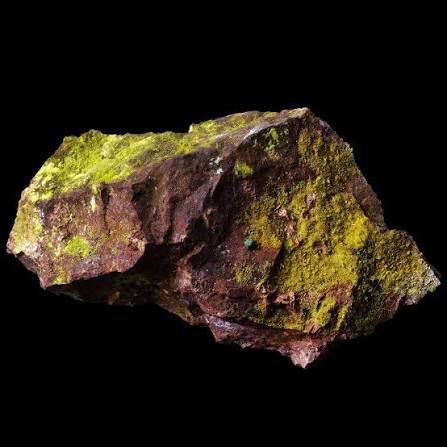
Bright yellow, delicately fibrous, and often brilliantly fluorescent, uranophane is one of nature’s most captivating uranium minerals. Discover how these remarkable crystals formed at the historic Yates Uranium Mine near Otter Lake, Québec, why they glow beneath ultraviolet light, and how they represent the final stage in a geological journey that began more than one billion years ago. Through specimens preserved in the Donald Wininger Collection, we explore one of the Grenville Province’s most fascinating mineral stories.

The rarest crystals in the world are not just beautiful—they’re geological improbabilities. While quartz and calcite are common, minerals like painite, benitoite, and red beryl require extreme conditions, unique chemistries, or single-locality environments to form. This guide explores 18 of the world’s rarest crystals, from Madagascar’s grandidierite to Tanzania’s tanzanite, explaining the geologic conditions that make them possible and the factors that drive their value. Collectors and jewelers prize these crystals for their scarcity, color, and provenance, while geologists see them as natural records of unusual processes. Whether you’re learning why red beryl is thousands of times rarer than diamond, how alexandrite changes color, or why crocoite can only be found in Tasmania, this article provides an authoritative reference for enthusiasts and professionals alike.