Description
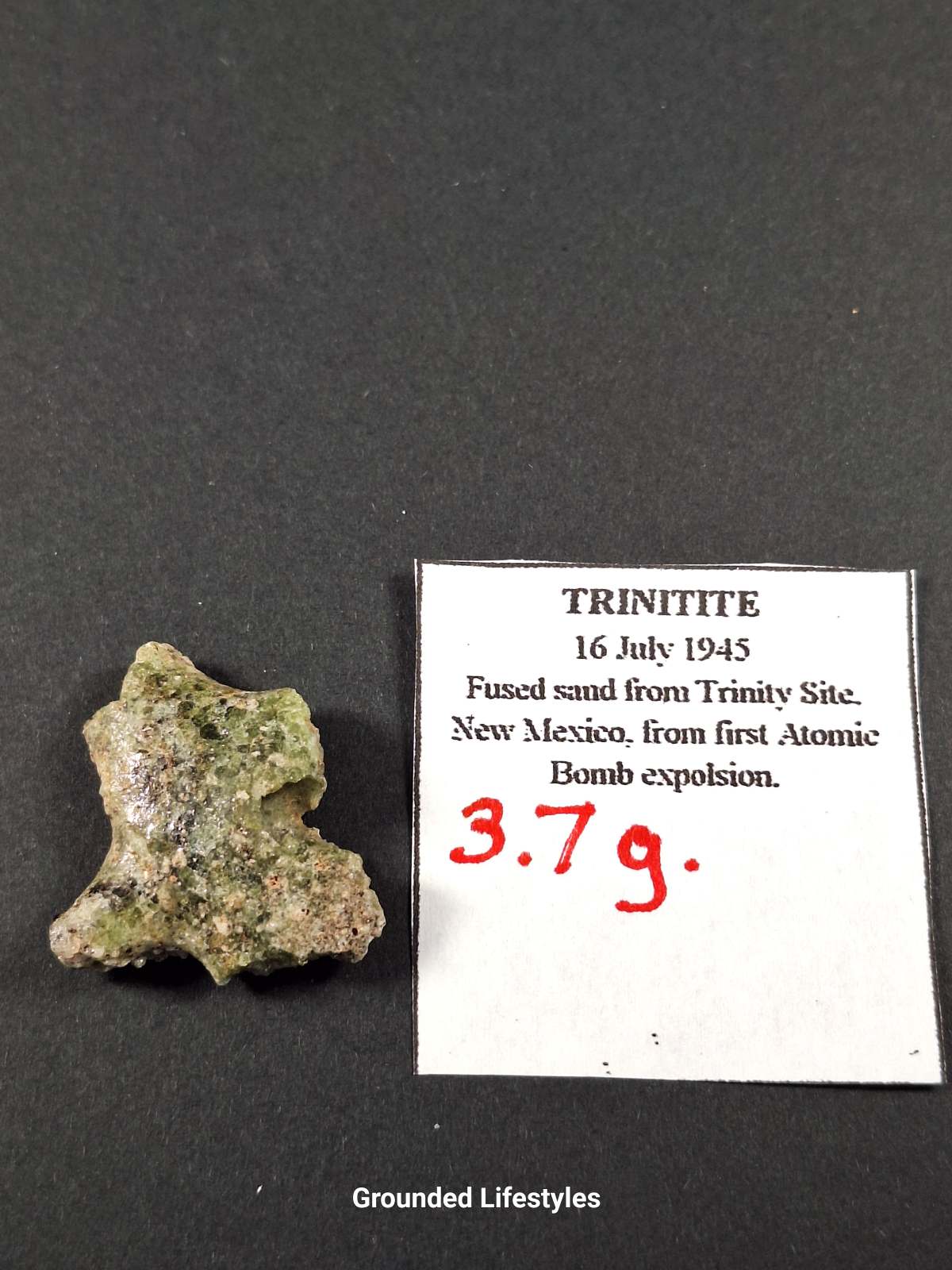
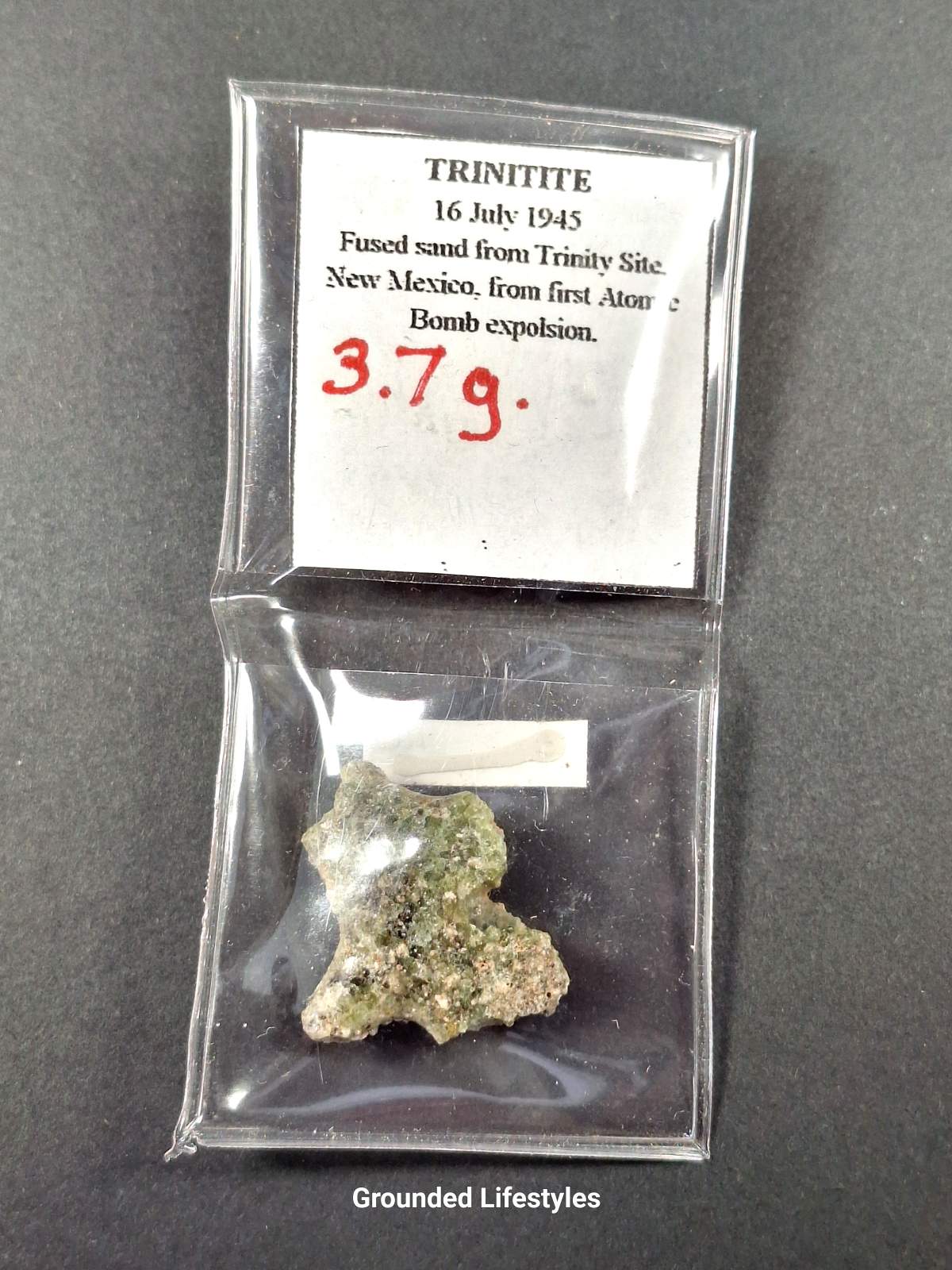
Trinitite Atomic Glass – 3.7 Gram New Mexico Specimen
Few collectible materials have an origin as historically significant as Trinitite. Formed during the world’s first nuclear weapons test on July 16, 1945, this unusual glass preserves a physical connection to the beginning of the atomic age.
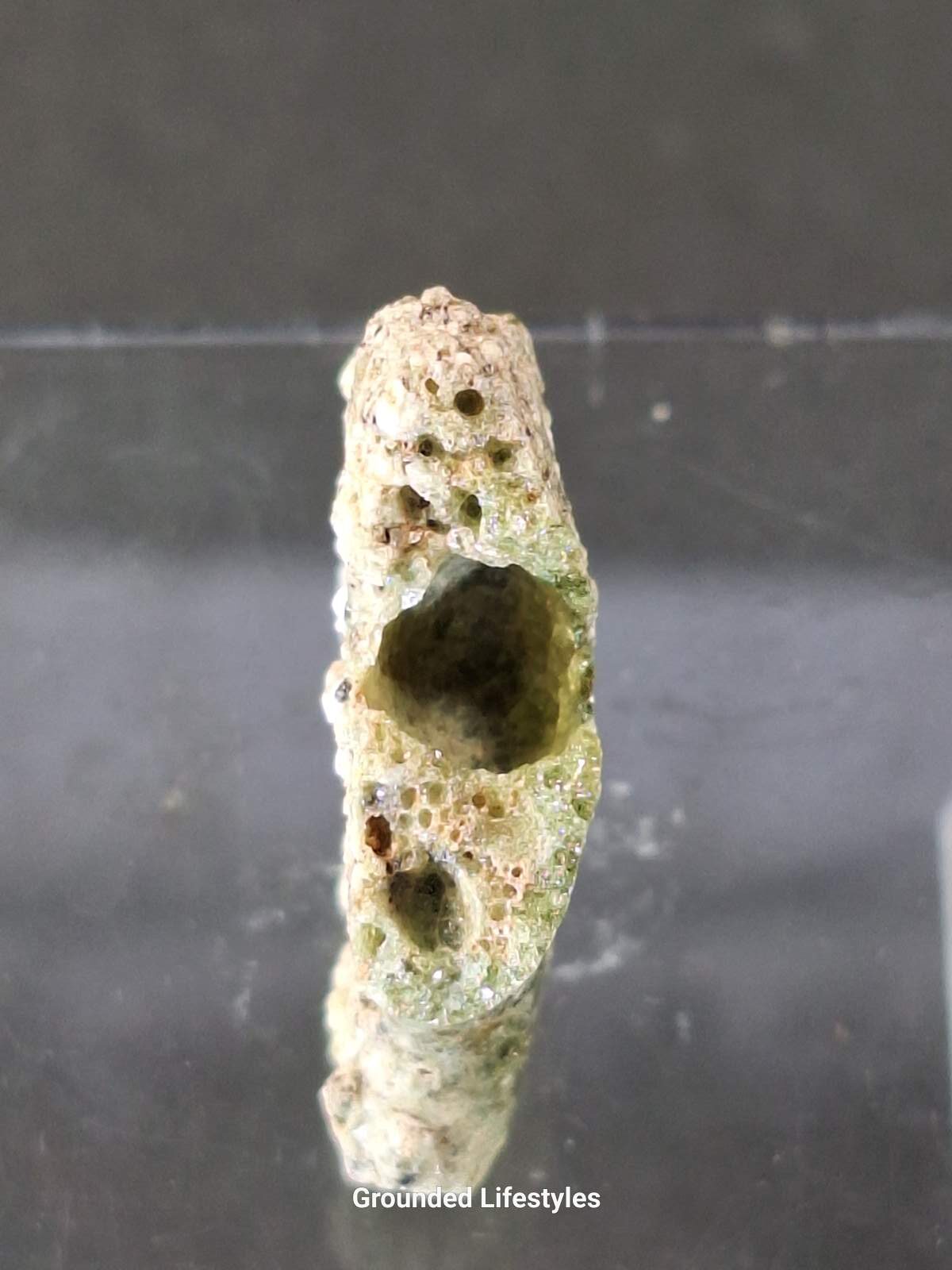
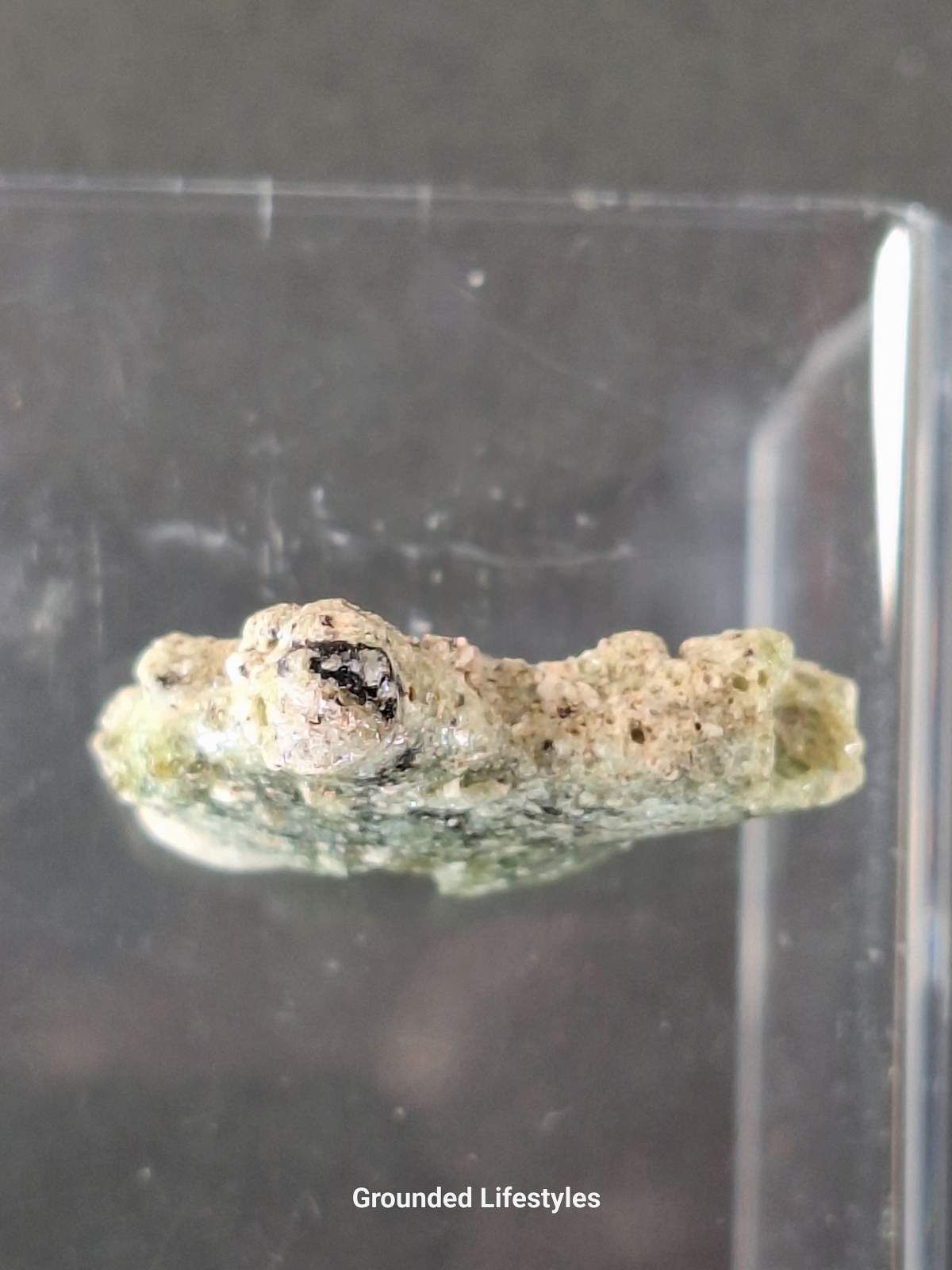
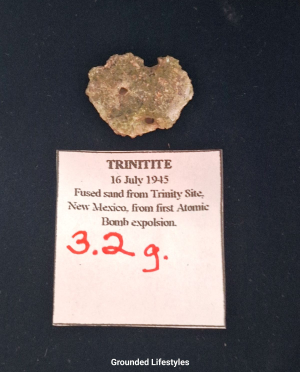
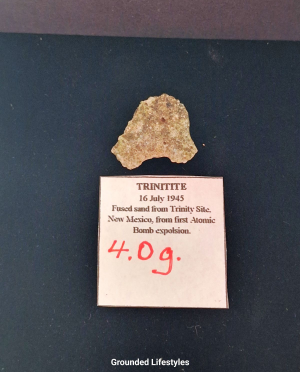
This 3.7-gram green Trinitite specimen is offered as a historical and scientific collectible associated with the Trinity test site in New Mexico. Unlike naturally occurring volcanic glass or impact glass, Trinitite was created by an extraordinary human-made event.
For collectors interested in nuclear history, unusual geological materials, and the science of glass formation, Trinitite occupies a distinctive place between historical artifact and scientific specimen.
The Trinity Test of July 16, 1945
The Trinity test took place at the Alamogordo Bombing Range, now part of White Sands Missile Range in southern New Mexico. Conducted as part of the Manhattan Project, it was the first detonation of a nuclear weapon.
The explosion produced extreme temperatures and intense radiation. Heat from the event melted portions of the sandy desert surface, creating glassy material that later became known as Trinitite.
The test marked a turning point in world history, preceding the atomic bombings of Hiroshima and Nagasaki in August 1945 and the beginning of the nuclear era.
Today, Trinitite is collected not simply for its unusual appearance, but for its direct association with this consequential event.
How Trinitite Formed
Trinitite is primarily a silica-rich glass produced when the heat of the nuclear explosion melted desert surface materials.
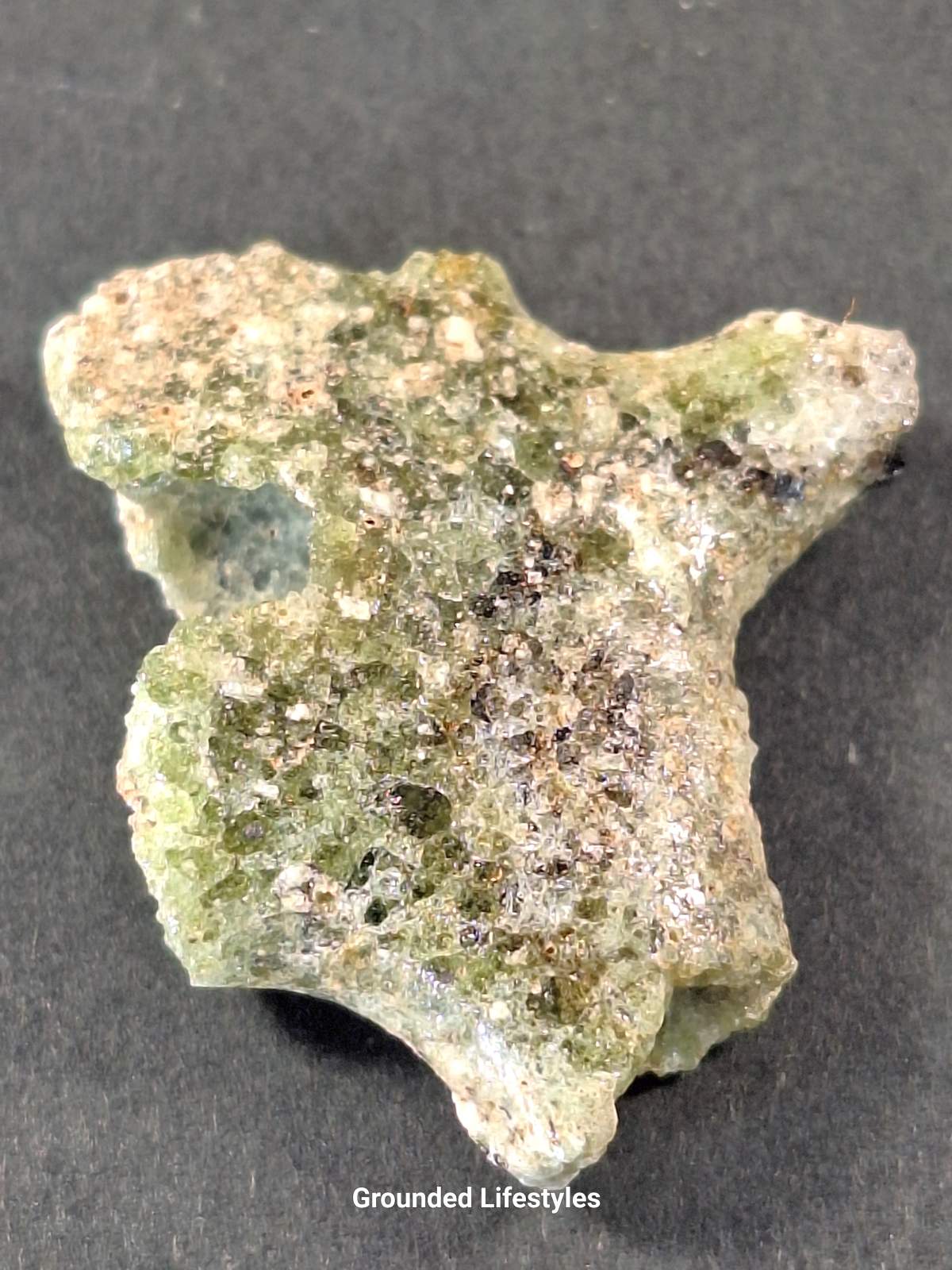
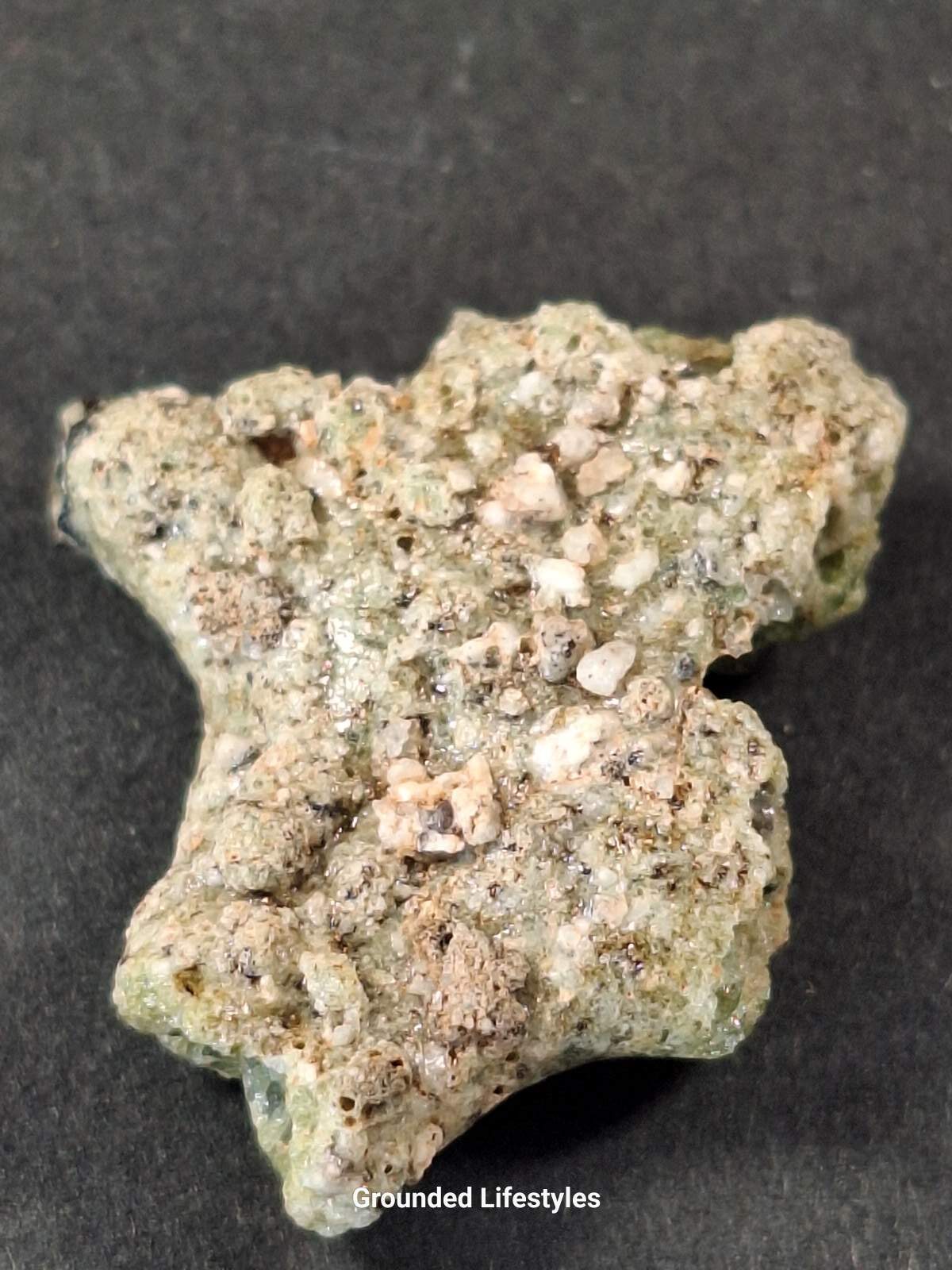
The resulting material cooled into irregular glassy fragments, often displaying pale green coloration, bubbles, uneven surfaces, and partially fused particles.
Its appearance varies according to the local materials involved in melting, the temperatures experienced, and the conditions under which the molten material cooled.
Although Trinitite may resemble natural tektites or volcanic glass, its origin is different. Tektites form through impact-related processes, while Trinitite was produced by a nuclear explosion.
Green Trinitite and Collectible Characteristics
Green is the color most commonly associated with Trinitite. Specimens can vary in shade, texture, thickness, and the amount of fused material visible.
Collectors often evaluate Trinitite according to its weight, visual character, preservation, documented provenance, and evidence supporting its identification.
At 3.7 grams, this specimen represents a measurable piece of atomic-age material suitable for a carefully maintained historical collection.
Because imitation and misidentified specimens exist, supporting provenance or analytical documentation can be particularly valuable when evaluating Trinitite.
Trinitite as a Historical Collectible
Trinitite appeals to collectors of unusual glass, scientific artifacts, twentieth-century history, and materials formed under exceptional physical conditions.
It also provides an opportunity to explore the relationship between scientific discovery, military technology, environmental consequences, and historical responsibility.
The material is a reminder that geological processes such as melting and rapid cooling can also occur during human-made events, producing substances that would not otherwise form in the same way.
Radiation, Handling, and Storage
Trinitite may retain residual radioactivity, and activity levels can vary between specimens. Its historical origin does not establish that any particular piece is safe for unrestricted handling.
Keep the specimen securely contained in an appropriate, clearly labeled display container. Avoid unnecessary direct handling, and do not cut, grind, polish, drill, or otherwise disturb the material, as doing so could create contaminated dust.
Do not allow children or pets to handle it. Keep it away from food, beverages, and living spaces where accidental contact could occur.
Any statement about this specimen’s radiation level should be supported by an actual measurement using suitable instrumentation. No radiation measurement or certification is provided in the available product information.
Product Details
- Material: Trinitite, nuclear-test-formed glass
- Weight: 3.7 grams
- Color: Green
- Historical association: Trinity nuclear test, July 16, 1945
- Reported locality: Trinity Site area, New Mexico, USA
- Formation: High-temperature melting of desert surface materials
- Classification: Anthropogenic glass, not a natural mineral or tektite
- Intended use: Historical and scientific collecting
- Storage: Secure, labeled containment recommended
This 3.7-gram Trinitite specimen represents a remarkable intersection of material science and twentieth-century history, offering collectors a tangible connection to the events that began the atomic age.