Description
The Piece
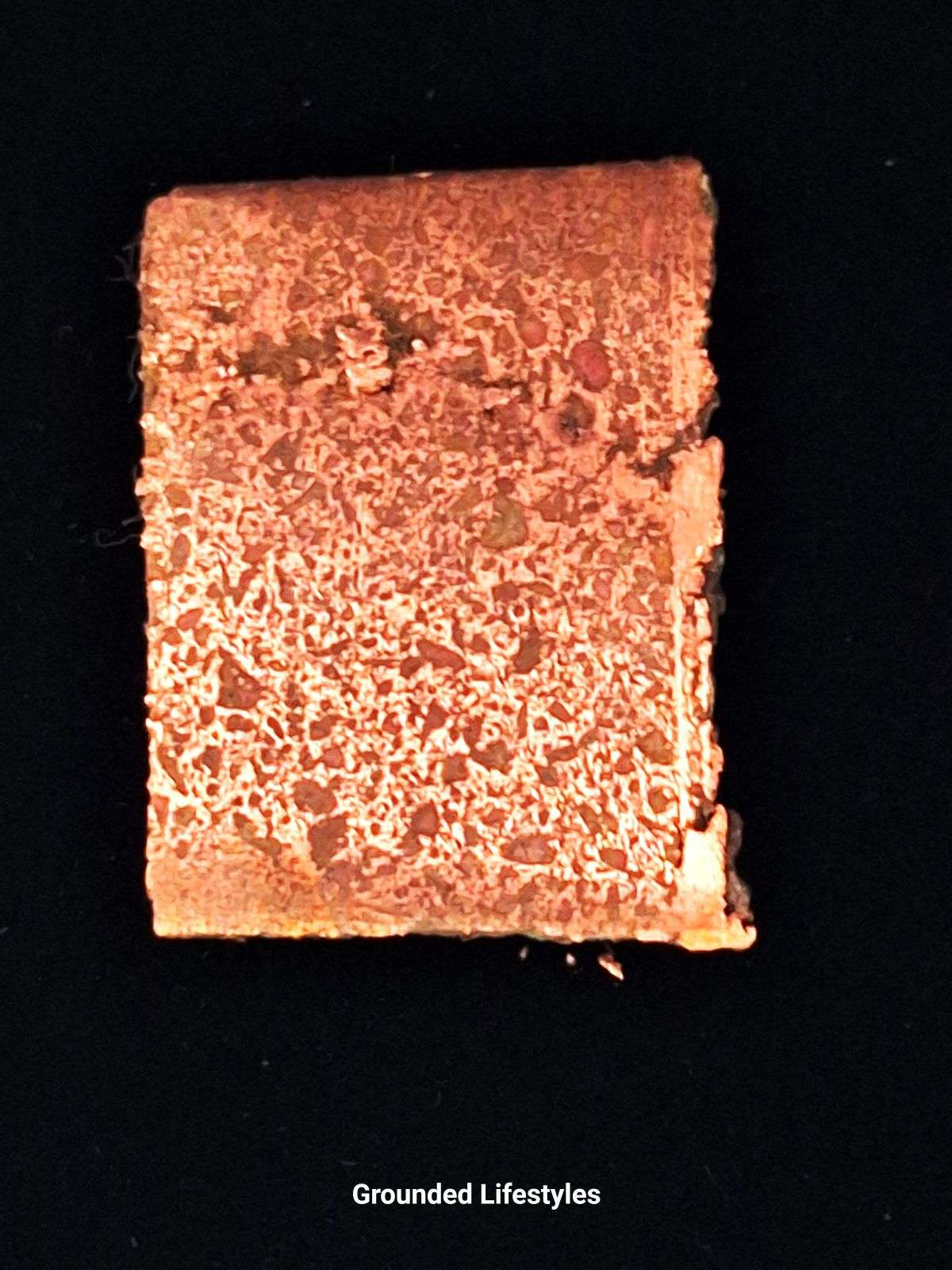
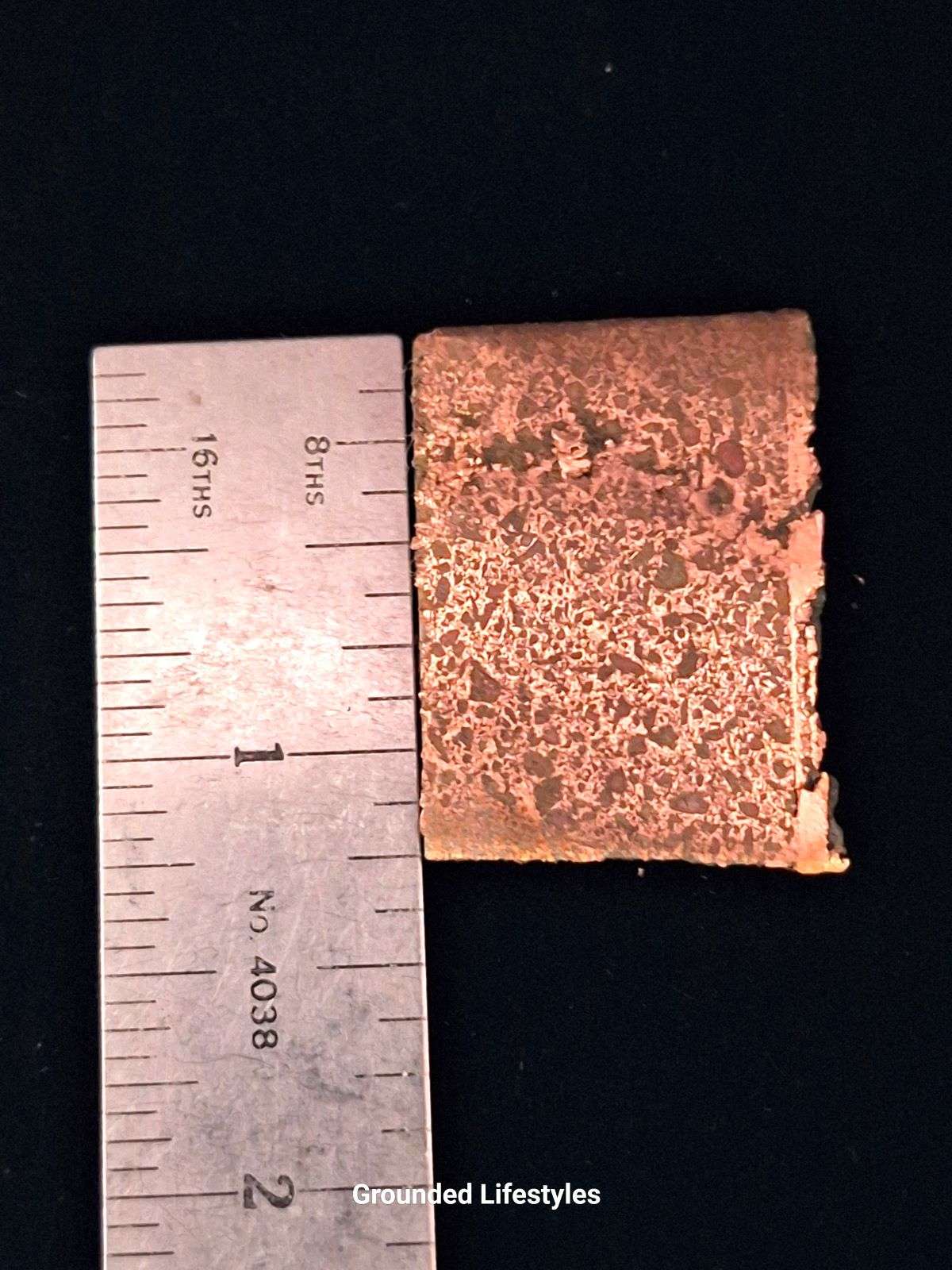
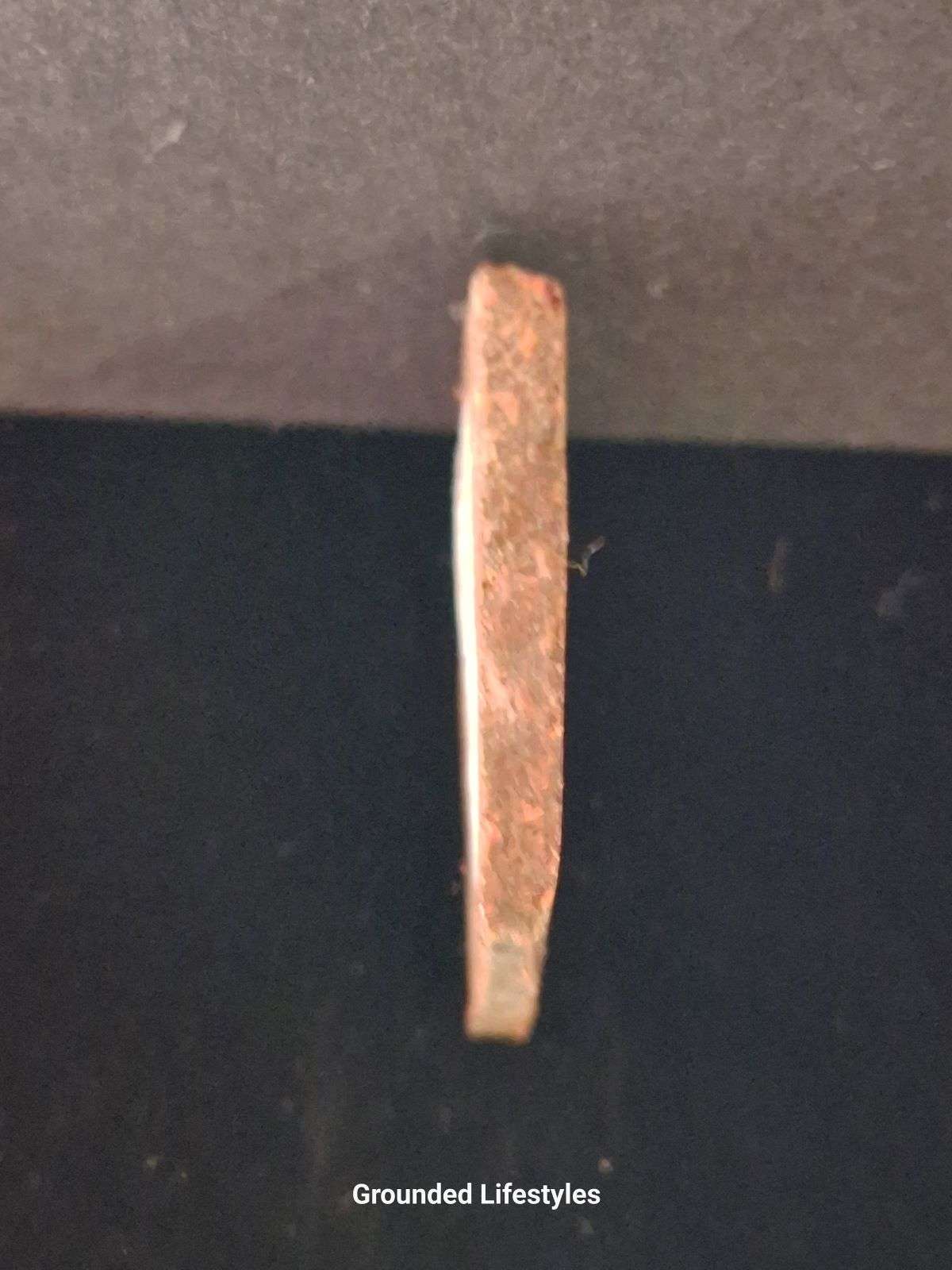
This copper firebrick measures about 1.25 inches. Bright metallic copper runs through and across fragments of refractory brick, and one face has been lightly polished so the copper flashes while the industrial texture of the brick stays intact. The contrast between smooth reddish metal and rough, heat-darkened ceramic is what makes copper firebrick so visually arresting for something so small.
What Copper Firebrick Is
Copper firebrick is not a natural mineral. It is a by-product of copper smelting. The furnaces that refined Keweenaw copper were lined with firebrick able to withstand extreme heat, and over years of use molten copper soaked into the bricks and filled their pores. When the smelters were dismantled, collectors and lapidaries salvaged sections of the copper-impregnated brick. One well-known example is the Calumet and Hecla smelter at Hubbell in Houghton County, which operated from 1886 until 1968, though firebrick of this kind came from several smelting operations in the district.
The Copper Behind It
The Keweenaw Peninsula holds the largest concentration of native copper on Earth, and commercial mining there ran from 1845 to 1996, producing roughly 15 billion pounds of copper. That copper formed about 1.06 billion years ago, when hot, mineral-rich fluids moved through ancient basalt lava flows and deposited the metal directly as native copper. Smelting was the step that turned much of this copper into industrial metal, and copper firebrick is physical evidence of that step.
Symbolism and Traditions
Fire and metal have long been symbols of transformation, and a fragment shaped by furnace heat carries that theme naturally. In metaphysical traditions copper is associated with energy, warmth, and vitality, and some people keep a piece like this as a reminder of strength gained through heat and pressure. These associations are traditional and symbolic, not scientifically demonstrated effects.
Care and Display
Refractory brick is porous and the copper is soft, so handle the piece gently and keep it dry. Brush away dust with a soft brush rather than washing it. The copper will darken over time, and you can leave the patina or lightly polish the metal. A small stand or a mineral box shows the polished face well.
Specifications
Size: about 1.25 inches. Material: copper-impregnated refractory firebrick. Locality: Michigan copper country.
Geological distinction: This copper-bearing refractory brick formed through industrial smelting, not natural mineral growth. The polished face helps illustrate how metallic copper penetrated and adhered to a furnace lining.