
$15.00
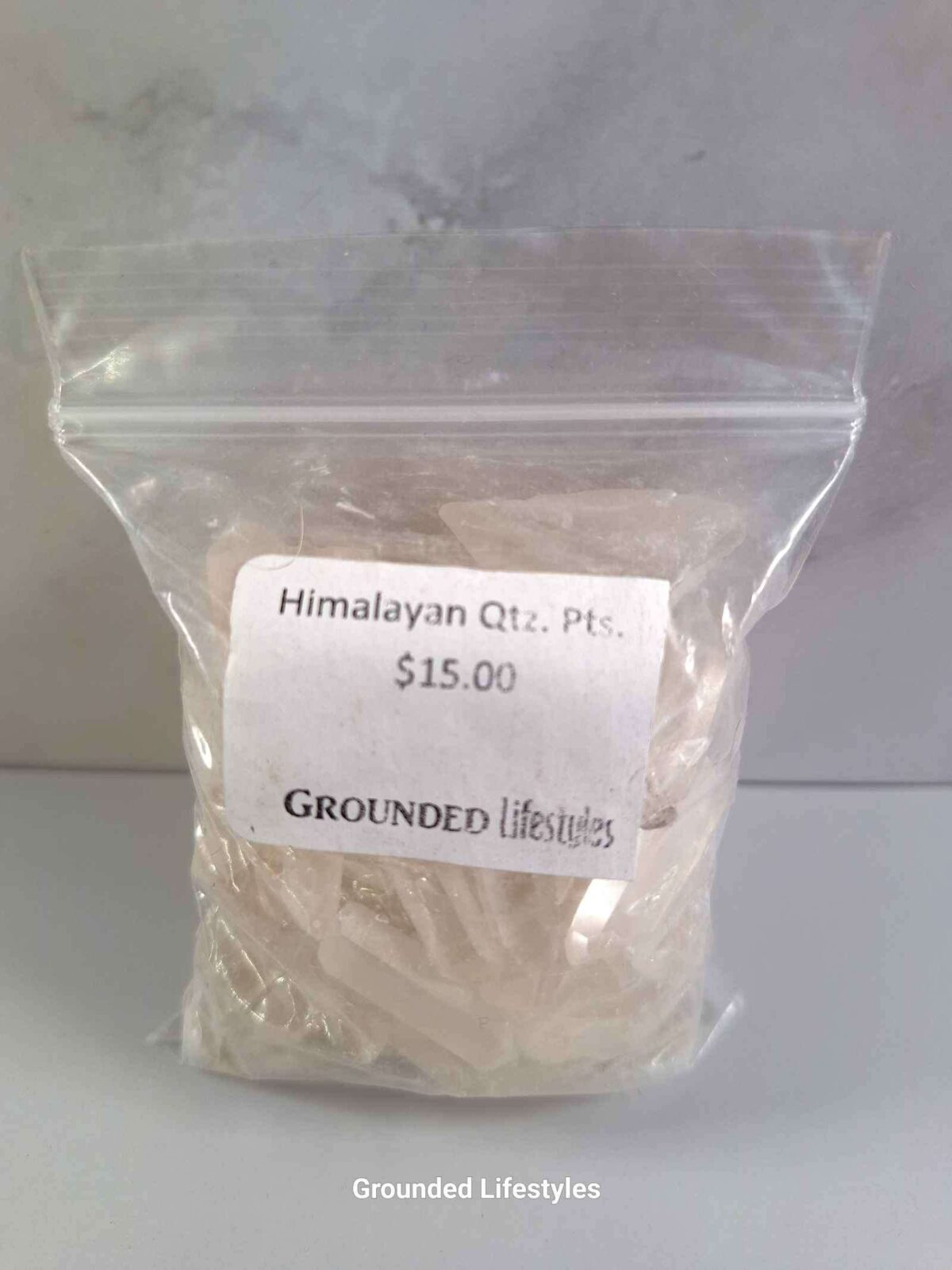
Pack of small natural Himalayan Quartz crystal points, often known in crystal traditions as Samadhi Quartz. These luminous natural Quartz points are valued for their unique Himalayan origin and are traditionally associated with clarity, balance, spiritual awareness, meditation, and the wisdom of the ancient mountains.
In stock
You will receive the exact specimen shown.
Carefully packed and shipped from Arizona.
Free U.S. shipping on orders of $70 or more.
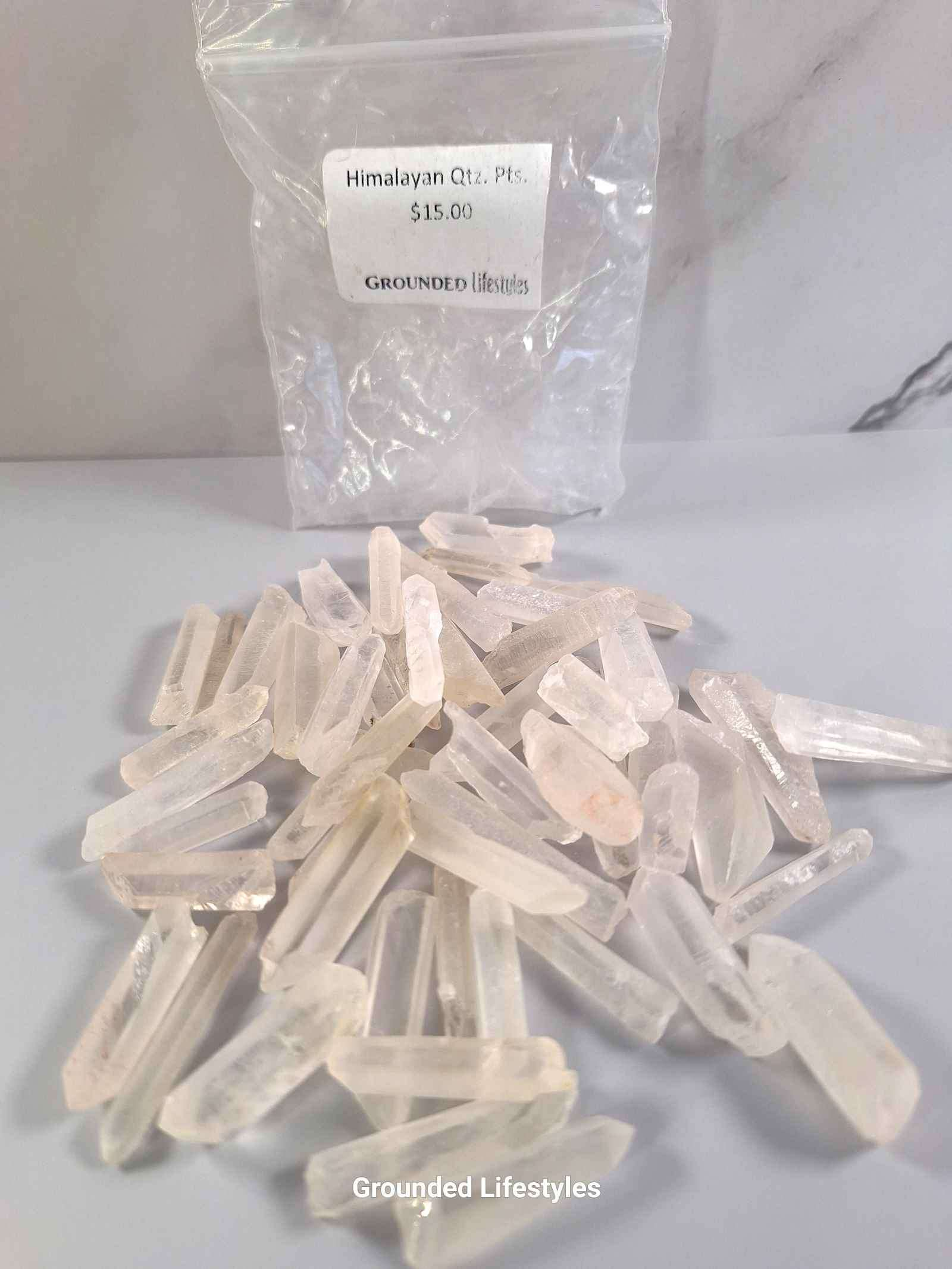
Each Himalayan Quartz Crystal Points Pack contains small natural Quartz points from the Himalayan region. Often called Samadhi Quartz within modern crystal and metaphysical traditions, these crystals retain their natural prismatic shapes, terminations, internal veils, and individual mineral character.
No two points are exactly alike. Individual crystals may vary in clarity, shape, surface texture, inclusions, and coloration, reflecting the natural growth of Quartz rather than a manufactured appearance. These smaller points are well suited for crystal collections, meditation, intention-setting, crystal grids, altar displays, décor, or carrying as personal stones.
Himalayan Quartz is natural Quartz, one of Earth’s most abundant and recognizable minerals. Quartz is composed of silicon dioxide (SiO₂) and develops its characteristic six-sided crystal form when it has sufficient space to grow.
Quartz crystals commonly develop from silica-rich hydrothermal fluids moving through fractures and cavities in rock. As temperature, pressure, and fluid chemistry change, dissolved silica can crystallize along the walls of these openings and gradually develop into individual points and crystal groups.
Himalayan Quartz can contain internal veils, fractures, phantoms, mineral inclusions, and subtle variations in color. Green inclusions in some Himalayan Quartz are commonly associated with chlorite, while other included minerals can occur depending on the geological setting. These natural features are part of what makes included Quartz particularly interesting to mineral and crystal collectors.
Mineral: Quartz
Chemical Formula: SiO₂
Mineral Class: Silicate
Crystal System: Trigonal
Mohs Hardness: 7
Luster: Vitreous
Typical Appearance: Clear to cloudy Quartz with natural veils, fractures, phantoms or mineral inclusions
Origin: Himalayan region
The term Samadhi Quartz is used within the crystal trade and metaphysical community for certain Quartz crystals associated with the Himalayan region. It is not a separate mineral species—mineralogically, these crystals are Quartz.
The word samadhi comes from Indian spiritual and philosophical traditions and refers broadly to a profound state of meditative absorption or contemplation. That connection has helped give Himalayan Quartz a particularly strong place within modern meditation and crystal practices.
For collectors, the appeal is equally physical. Natural Himalayan Quartz points can preserve delicate terminations, interesting internal structures, mineral inclusions, and individual growth characteristics that make every crystal different.
These smaller Himalayan Quartz points can range from relatively clear to included or cloudy, with natural internal veils and occasional variations in coloration. Some pieces may display mineral inclusions, while others are valued primarily for their clarity, crystal form, or natural termination.
Because these are natural crystals, minor surface irregularities, contact marks, uneven growth, and internal fractures can occur. These characteristics are part of the natural formation of the Quartz and give each pack its own appearance.
Within metaphysical traditions, Himalayan Quartz and Samadhi Quartz are strongly associated with clarity, spiritual awareness, meditation, intuition, balance, and higher consciousness. Their connection with the Himalayan landscape has also contributed to their symbolism of stillness, wisdom, contemplation, and spiritual growth.
Quartz itself is widely regarded in crystal traditions as an amplifying stone and is frequently used to support intentions, meditation practices, and combinations with other crystals. Small Himalayan Quartz points are especially useful in crystal grids, where their natural terminations can be positioned around a central stone or used to symbolically direct and focus intention.
Samadhi Quartz is commonly associated with the Crown Chakra and Third Eye Chakra, making these points popular for meditation and practices centered on intuition, awareness, contemplation, and spiritual connection. They may be held during meditation, placed on an altar or sacred space, carried as personal stones, or combined with other crystals during intention-setting.
Metaphysical Associations: Clarity, meditation, intuition, balance, spiritual awareness, amplification, wisdom, harmony, and higher consciousness
Primary Chakra: Crown
Secondary Chakra: Third Eye
Common Uses: Meditation, crystal grids, intention-setting, altar displays, energy work, and personal spiritual practice
Quartz is relatively durable at 7 on the Mohs scale, but natural crystal points and terminations can still chip if dropped or struck against a hard surface. Handle smaller points carefully and store them in a pouch, padded container, or separate compartment when not in use.
For routine cleaning, gently wipe the crystals with a soft cloth. If necessary, briefly rinse with clean water and dry thoroughly. Because natural mineral inclusions can vary from point to point, gentle cleaning is preferable to harsh chemicals or aggressive cleaning methods.
| Weight | 3.4 oz |
|---|---|
| Dimensions | 2.5 × 1 × 3 in |
Only logged in customers who have purchased this product may leave a review.
Reviews
There are no reviews yet.