Description
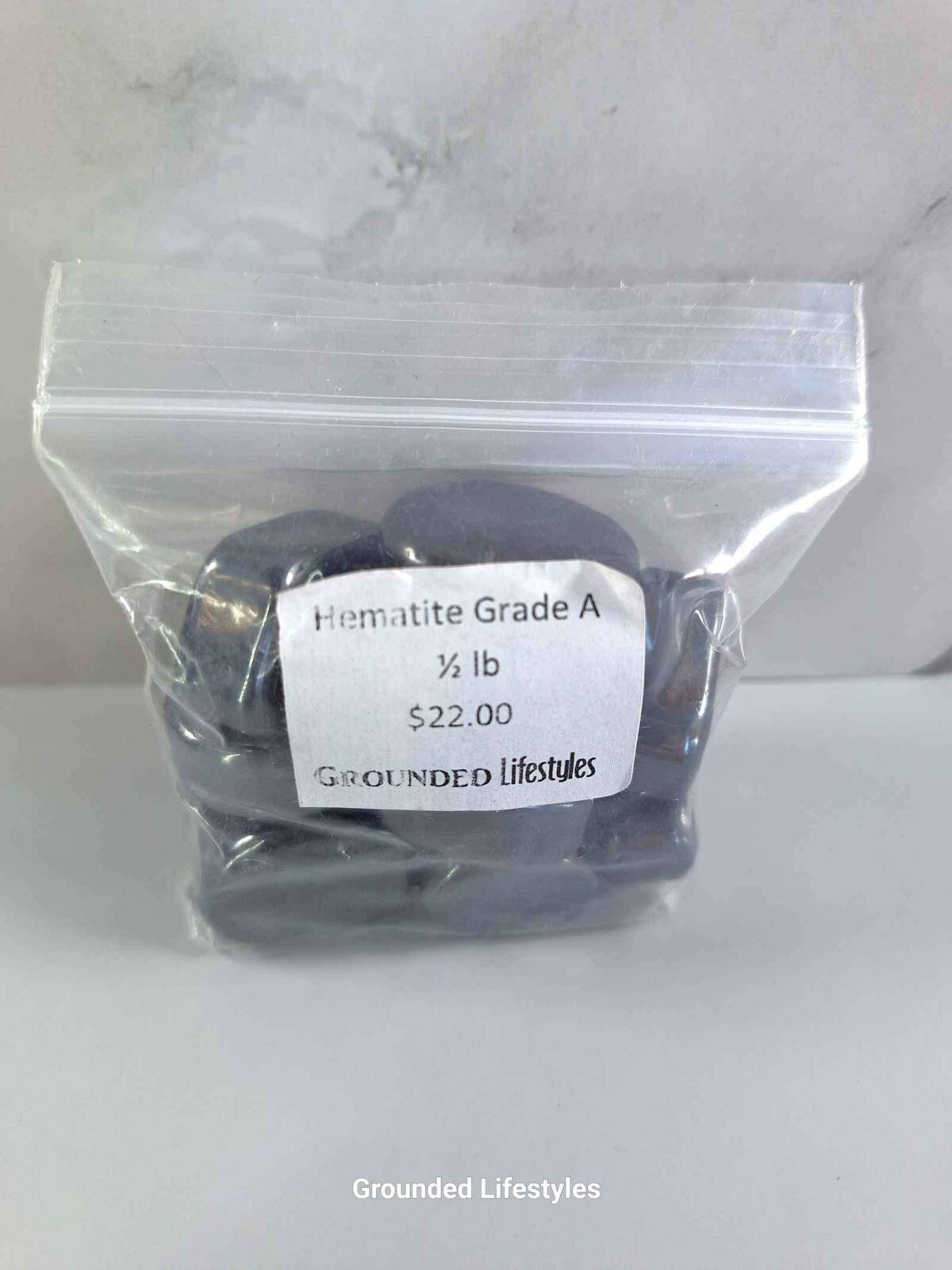
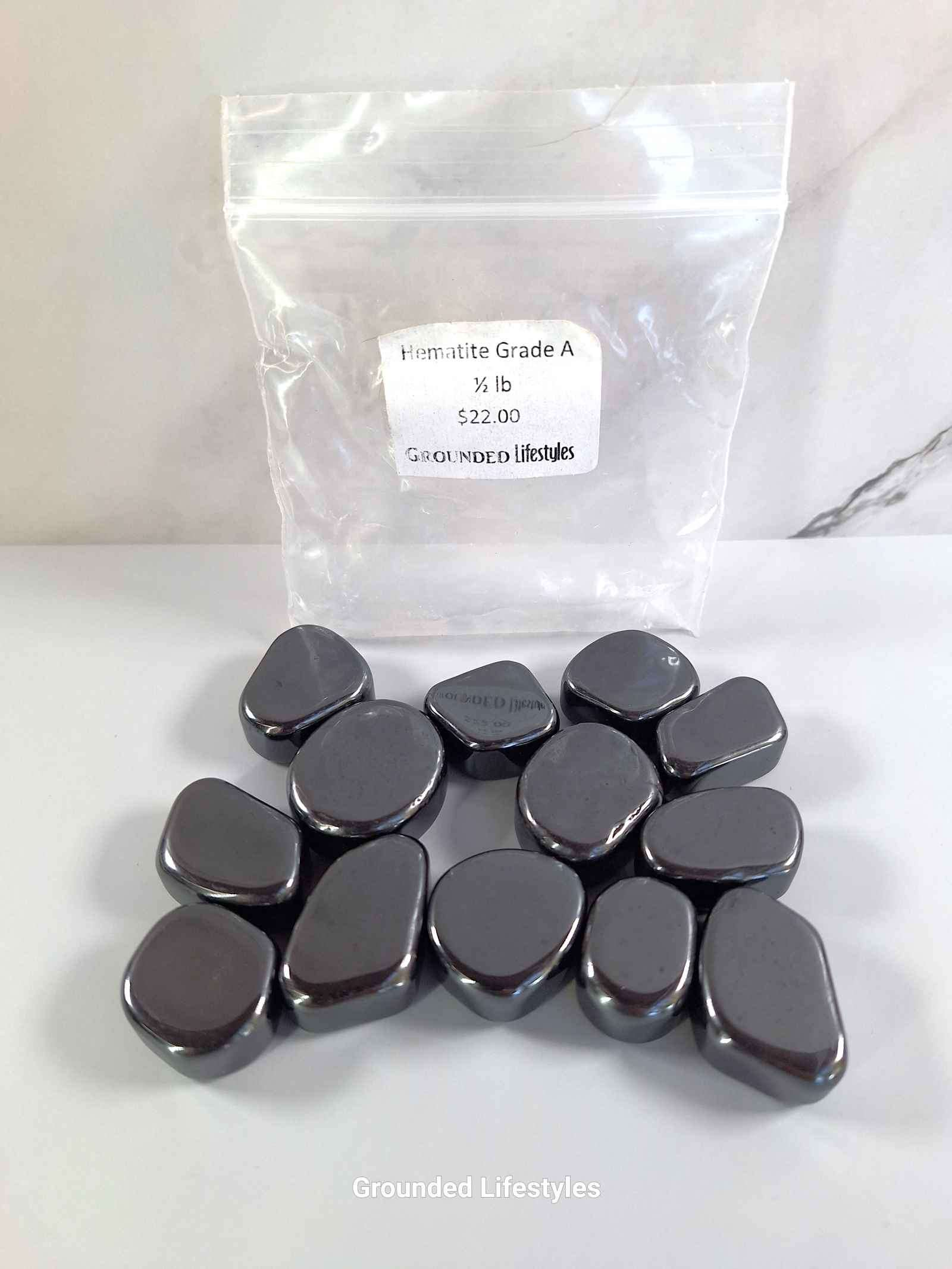
Each Hematite Tumbled Stone Pack contains polished natural Hematite stones with the distinctive metallic silver-gray luster associated with this iron oxide mineral. Hematite has a noticeably dense, substantial feel compared with many common tumbled stones, while polishing produces a smooth, highly reflective surface.
These polished Hematite stones are suited for mineral collections, display, pocket stones, meditation, and crystal grids. Their metallic appearance also creates a striking contrast when displayed alongside quartz, jasper, agate, and other colorful polished stones.
Hematite Geology & Mineral Properties
Hematite is a naturally occurring iron oxide mineral with the chemical formula Fe₂O₃ and one of the world’s most important iron-bearing minerals. It forms in several geological environments, including sedimentary iron formations, hydrothermal deposits, igneous rocks, and metamorphic settings.
Hematite is particularly important in ancient banded iron formations, enormous iron-rich sedimentary deposits that preserve evidence of changing conditions in Earth’s early oceans and atmosphere. Major hematite deposits occur in regions including Brazil, Australia, China, and the Lake Superior region of North America.
Although polished Hematite is commonly metallic silver-gray to nearly black, one of its most useful identifying characteristics is its reddish-brown streak. This connection between its metallic appearance and red powdered form also influenced the mineral’s name.
Mineral Class: Oxide
Chemical Formula: Fe₂O₃
Crystal System: Trigonal
Mohs Hardness: Approximately 5.5–6.5
Luster: Metallic to submetallic
Streak: Reddish brown to red
Typical Color: Steel gray, silver gray, black, reddish brown
History & Mineral Collecting
The name Hematite derives from the Greek word haima, meaning “blood,” a reference to the red coloration produced when the mineral is powdered. Iron-rich pigments containing hematite have been used by people since prehistoric times, making it a mineral with both geological and cultural significance.
For collectors, Hematite is notable for the contrast between its dense iron-rich composition, metallic appearance, and characteristic red streak. In polished tumbled form, its reflective surface and substantial weight make it easy to distinguish from many lighter-colored quartz and feldspar materials.
These stones are natural Hematite and have not been artificially magnetized.
Metaphysical Properties of Hematite
Hematite is one of the best-known grounding stones in crystal and metaphysical traditions. Its dense, iron-rich composition and metallic appearance have long contributed to its association with strength, stability, protection, focus, and connection to the Earth.
Hematite is commonly used when seeking a stronger sense of grounding and balance, particularly during meditation, intention-setting, or demanding periods that require concentration and perseverance. Many crystal practitioners work with Hematite as a pocket stone or place it in a workspace as a symbolic reminder to remain centered, focused, and confident.
Traditionally associated with the Root Chakra, Hematite is often incorporated into crystal grids and grounding practices alongside stones such as Black Tourmaline, Smoky Quartz, and Red Jasper. It is also commonly associated with Aries and Aquarius in modern crystal traditions.
Metaphysical associations: Grounding, protection, stability, focus, confidence, strength, balance, and perseverance
Primary Chakra: Root
Common Zodiac Associations: Aries and Aquarius
Element: Earth
Care & Handling
Clean polished Hematite with a soft, dry or slightly damp cloth and dry it thoroughly afterward. Avoid prolonged exposure to moisture, saltwater, harsh chemicals, and abrasive cleaners. Although Hematite is relatively durable, polished surfaces can scratch or chip from contact with harder minerals or hard impacts, so store the stones carefully when not in use.
Only logged in customers who have purchased this product may leave a review.

Reviews
There are no reviews yet.