Description
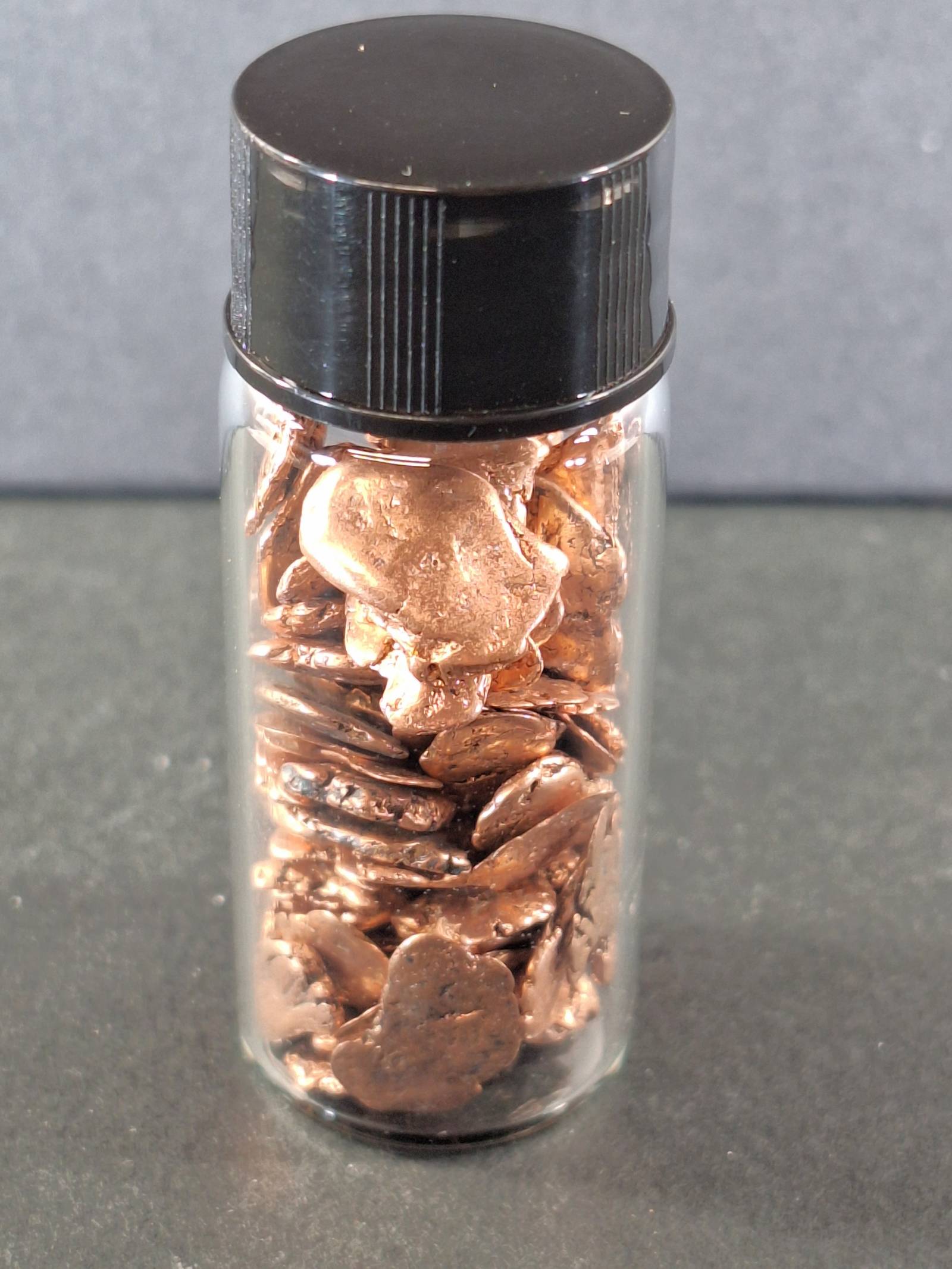
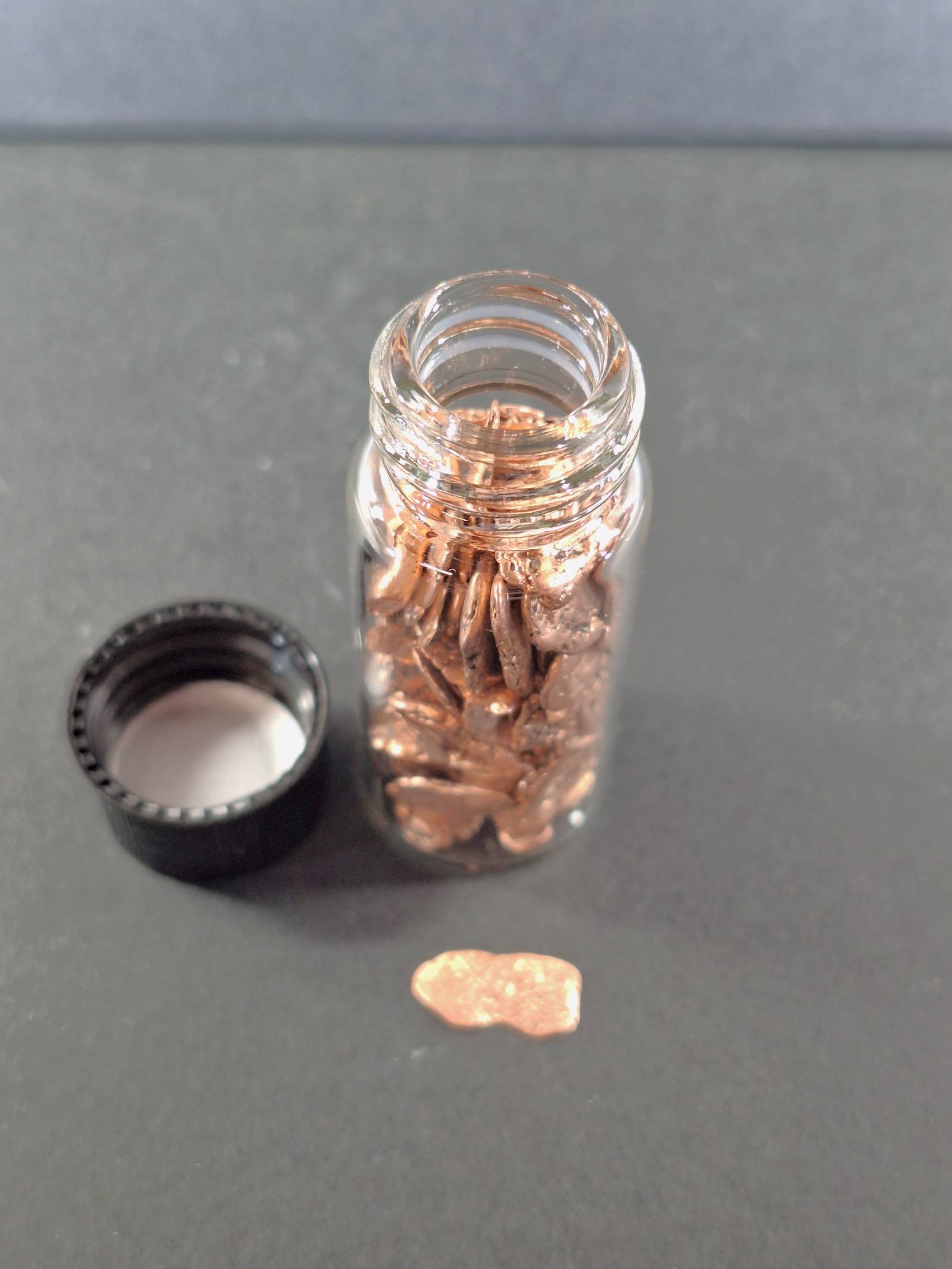
Michigan Native Copper Mill Nuggets in a Glass Bottle
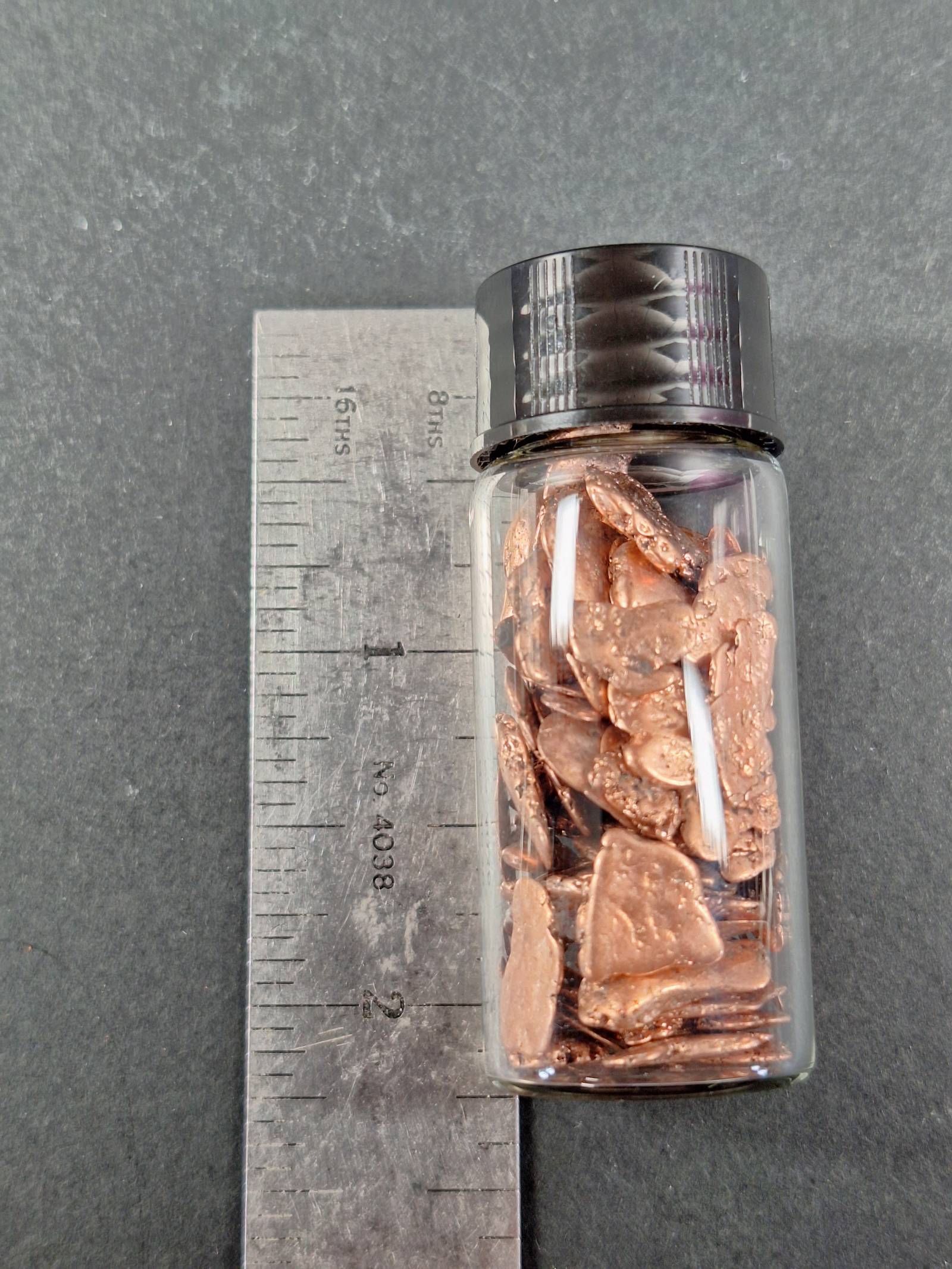
These native copper mill nuggets from Michigan bring a fascinating part of American mining history into a small, easy-to-display collectible. Presented in a glass bottle measuring approximately 1.5 inches, the copper pieces offer a close look at one of the few metals that occurs naturally in its elemental form. Rather than being manufactured from melted copper, native copper originates as metallic deposits within the Earth’s crust.
The term mill nuggets refers to pieces of copper associated with mineral-processing material. Their compact form makes them particularly appealing to collectors interested in Michigan’s Copper Country, historic mining, and naturally occurring metals.
Michigan’s Historic Copper Country
Michigan’s Upper Peninsula is internationally recognized for its native copper deposits, particularly those associated with the Keweenaw Peninsula and the Lake Superior copper district. Indigenous peoples mined and worked copper in this region thousands of years before the development of modern industrial mining, using the metal to make tools, ornaments, and trade goods.
Commercial mining expanded dramatically during the 1840s, transforming communities throughout the region. Mines such as Quincy and Calumet & Hecla became important parts of Michigan’s industrial history, while stamping and milling operations processed copper-bearing rock to separate valuable metal from surrounding material.
Michigan native copper remains especially interesting to mineral collectors because of its geological occurrence and the long history of people who worked with it.
How Native Copper Forms
Native copper is a naturally occurring metallic mineral with the chemical formula Cu. It belongs to the isometric crystal system and has a Mohs hardness of approximately 2.5–3. Unlike many copper ores, which contain copper chemically combined with sulfur, oxygen, or other elements, native copper occurs primarily as the metal itself.
In Michigan’s famous copper district, copper-bearing fluids moved through ancient volcanic rocks and sedimentary formations associated with the Midcontinent Rift. Over geological time, copper accumulated in fractures, cavities, and spaces between rock particles. These processes produced deposits ranging from tiny grains to substantial masses of metallic copper.
Fresh copper has a warm reddish metallic appearance, while exposure to air and moisture can gradually produce darker surface oxidation. Such changes are part of the natural behavior of copper.
Traditional Symbolism of Copper
Copper has long been valued for its beauty, workability, and usefulness. In contemporary crystal and metaphysical traditions, it is often associated with energy flow, connection, vitality, and the symbolic movement of intention. Some collectors incorporate native copper into meditation spaces or arrange it alongside quartz and other minerals as part of personal spiritual practices.
These associations reflect cultural and metaphysical beliefs rather than scientifically established effects.
Care and Display
Keep the glass bottle in a dry location away from prolonged moisture and harsh cleaning chemicals. Copper naturally develops surface oxidation, so changes in color may occur over time. Avoid abrasive cleaning methods that could alter the surface of the nuggets.
The 1.5-inch bottle offers a compact way to display Michigan native copper alongside mineral specimens, geological curiosities, or historical mining collectibles. It is also an engaging example of the relationship between natural mineral formation and the history of metal extraction in the United States.
Only logged in customers who have purchased this product may leave a review.

Reviews
There are no reviews yet.