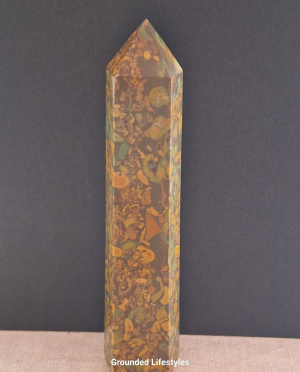
Crystal Points by Mineral Type
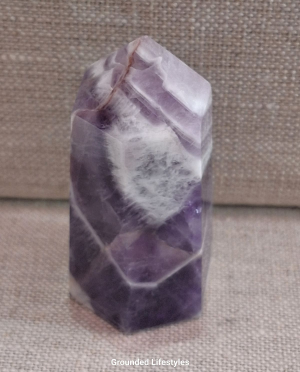
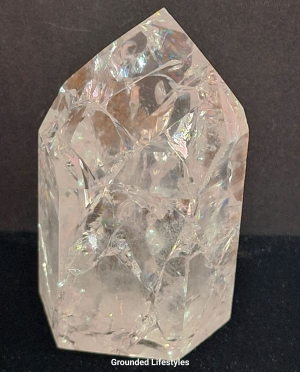
Quartz Family Points (Clear, Amethyst, Smoky, Citrine)
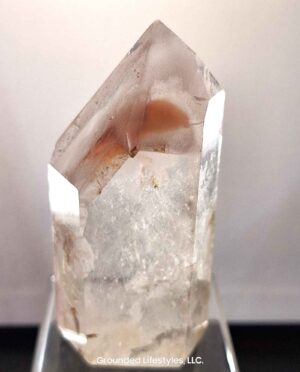
Quartz belongs to the trigonal division of the hexagonal crystal system. Its classic point shape — a hexagonal prism capped by rhombohedral faces is why quartz points are often described as “arrows of light.”
Where quartz points form:
-
Hydrothermal veins (e.g., Arkansas): slow cooling allows large, clear prisms.
-
Basaltic geodes (Brazil & Uruguay): cavities fill sequentially with chalcedony, quartz, and often amethyst.
Color origins:
Collectors value internal phantoms, growth zoning, and fluid inclusions that record changing chemistry over time.
Fluorite Points
Fluorite (CaF₂) forms in hydrothermal veins and carbonate-hosted ore systems. Its vivid colors arise from electron color centers created by lattice defects and irradiation.
Because fluorite has perfect octahedral cleavage (Mohs 4), well-made points feature slightly broader tips and thicker edges for durability.
Calcite Points
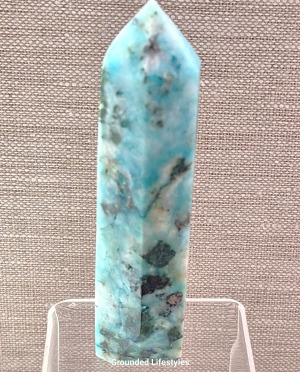
Calcite precipitates from low-temperature hydrothermal fluids and sedimentary waters. While some natural calcite crystals are point-like, most calcite towers are carved.
Calcite’s rhombohedral cleavage requires gentle handling and conservative polishing angles, producing satin-to-gloss finishes rather than glassy luster.
Feldspar (Labradorite) Points
Labradorite is a plagioclase feldspar formed in igneous environments. Its signature labradorescence results from microscopic lamellae that diffract light.
To maximize color flash, lapidaries orient towers carefully; edges are kept thicker to protect against cleavage.
Obsidian Points
Obsidian is volcanic glass formed by rapid cooling of silica-rich lava. It lacks a crystal lattice but takes a mirror polish.
With Mohs 5–5.5 and conchoidal fracture, obsidian points require blunter tips to reduce chipping.
Zeolite Points (e.g., Scolecite)
Zeolites grow as acicular sprays in basalt cavities. Any “point” appearance is artisan-shaped from massive material.
Lower hardness and cleavage demand gentle display and cleaning.