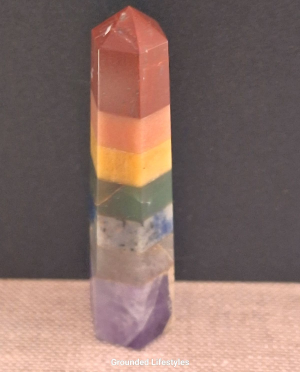
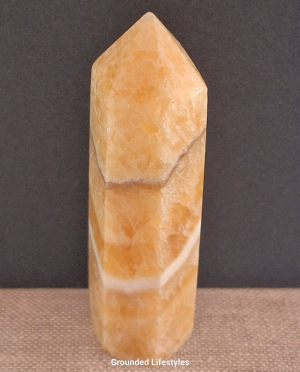
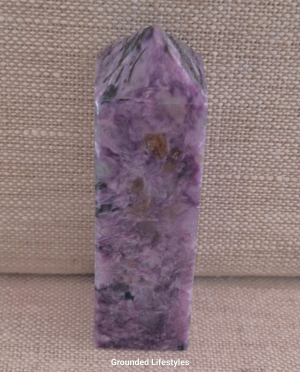
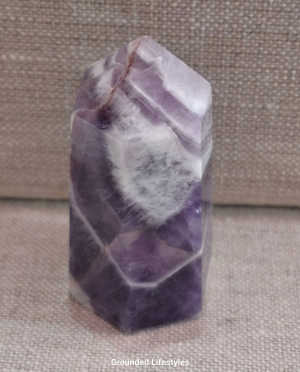
Crystal Points

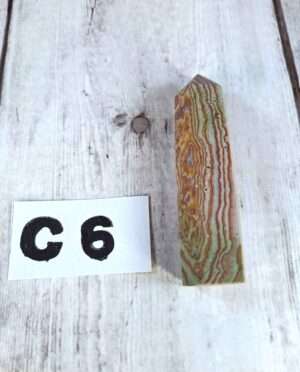
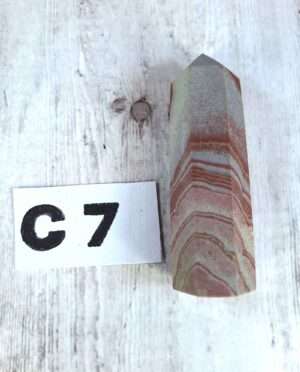
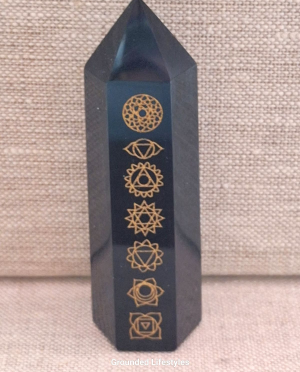
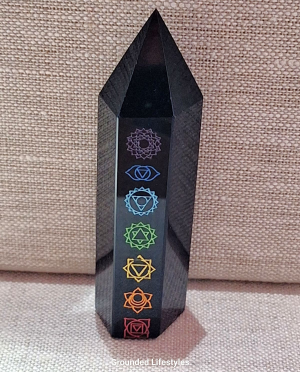
Crystal points capture Earth’s geometry in its most focused and expressive form. Shaped either by nature or skilled lapidary hands, crystal points highlight the internal structure, clarity, and optical behavior of minerals formed deep within the planet. From naturally terminated quartz prisms to carefully polished towers of fluorite, calcite, labradorite, and obsidian, each point represents both geological precision and symbolic direction.

“Crystal points” is a shape category that spans many different minerals with distinct origins. Some stones — such as quartz — commonly grow as naturally terminated prisms, displaying classic hexagonal faces and pointed terminations. Others, including fluorite, calcite, feldspar, obsidian, and zeolites, are shaped and polished to reveal architectural geometry that echoes (or contrasts with) their internal structure. Understanding this distinction matters for durability, value, and care.

Collectors, designers, and energy practitioners are drawn to crystal points for their symmetry, light interaction, and directional form. Each polished surface reflects and refracts light, while internal inclusions, zoning, and color variation preserve a visible record of geological growth. Whether displayed as a single focal piece or arranged in ascending formations, crystal points offer both scientific fascination and visual impact.

At Grounded Lifestyles, our Crystal Points collection includes hand-selected examples sourced from mineral-rich regions worldwide. We curate for material integrity, polish quality, stability of form, and authentic mineral origin. Natural terminations, lapidary-shaped towers, single-terminated points, and double-terminated designs are all clearly represented.

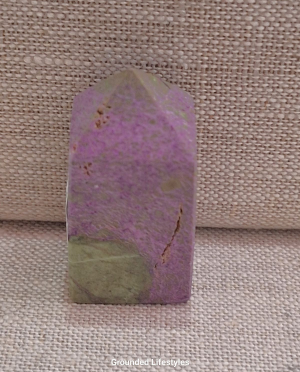
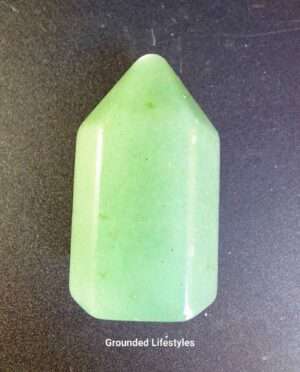
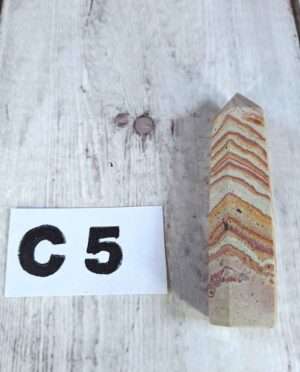
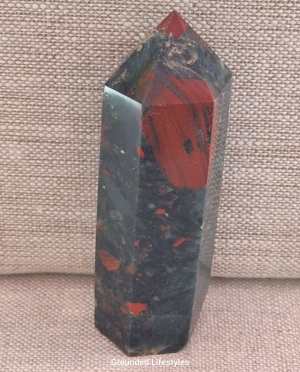
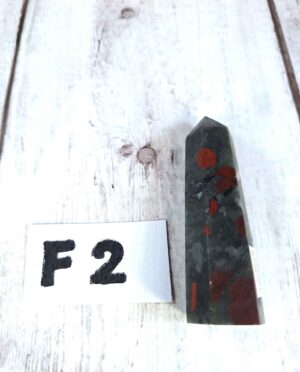
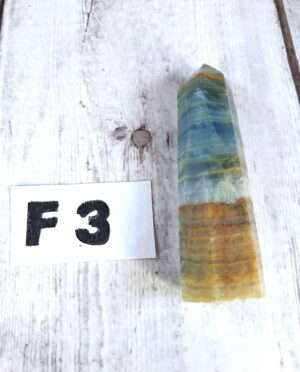
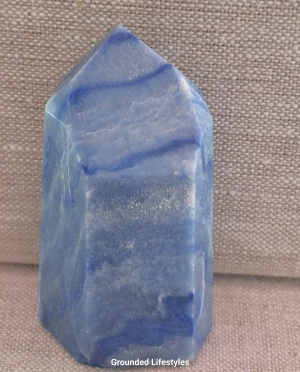
All crystal points offered here are individually photographed. You receive the exact piece shown with size, material, and finish accurately displayed so you can collect and display with confidence.

Quick Facts:

  • Shape Type: Single-terminated, double-terminated, lapidary towers

  • Materials: Quartz, fluorite, calcite, labradorite, obsidian, jasper, agate, zeolites

  • Hardness Range: Mohs 3–7+ (varies by mineral)

  • Use: Collecting, décor, meditation, energy grids

  • Origin: Global mineral localities & artisan lapidary centers

Crystal Points by Mineral Type

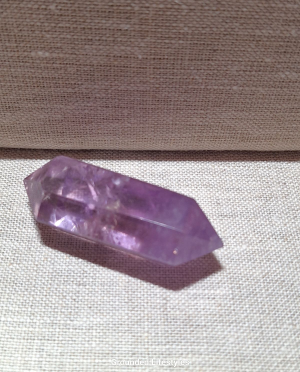
Quartz Family Points (Clear, Amethyst, Smoky, Citrine)

Quartz belongs to the trigonal division of the hexagonal crystal system. Its classic point shape — a hexagonal prism capped by rhombohedral faces is why quartz points are often described as “arrows of light.”

Where quartz points form:

  • Hydrothermal veins (e.g., Arkansas): slow cooling allows large, clear prisms.

  • Basaltic geodes (Brazil & Uruguay): cavities fill sequentially with chalcedony, quartz, and often amethyst.

Color origins:

  • Amethyst: Iron impurities and natural irradiation.

  • Citrine: True natural citrine is rare; most commercial citrine is heat-treated amethyst (still genuine quartz and disclosed accordingly).

Collectors value internal phantoms, growth zoning, and fluid inclusions that record changing chemistry over time.


Fluorite Points

Fluorite (CaF₂) forms in hydrothermal veins and carbonate-hosted ore systems. Its vivid colors arise from electron color centers created by lattice defects and irradiation.

Because fluorite has perfect octahedral cleavage (Mohs 4), well-made points feature slightly broader tips and thicker edges for durability.


Calcite Points

Calcite precipitates from low-temperature hydrothermal fluids and sedimentary waters. While some natural calcite crystals are point-like, most calcite towers are carved.

Calcite’s rhombohedral cleavage requires gentle handling and conservative polishing angles, producing satin-to-gloss finishes rather than glassy luster.


Feldspar (Labradorite) Points

Labradorite is a plagioclase feldspar formed in igneous environments. Its signature labradorescence results from microscopic lamellae that diffract light.

To maximize color flash, lapidaries orient towers carefully; edges are kept thicker to protect against cleavage.


Obsidian Points

Obsidian is volcanic glass formed by rapid cooling of silica-rich lava. It lacks a crystal lattice but takes a mirror polish.

With Mohs 5–5.5 and conchoidal fracture, obsidian points require blunter tips to reduce chipping.


Zeolite Points (e.g., Scolecite)

Zeolites grow as acicular sprays in basalt cavities. Any “point” appearance is artisan-shaped from massive material.

Lower hardness and cleavage demand gentle display and cleaning.

Where Our Crystal Points Come From

  • Brazil: Clear quartz, amethyst, citrine with natural terminations

  • Madagascar: Rose quartz, flower agate, labradorite with soft internal glow

  • India: Aventurine, scolecite, and skilled lapidary work

  • China: Fluorite and calcite with complex zoning

  • United States: Quartz from Arkansas; obsidian from Oregon

Each region contributes distinctive material characteristics and lapidary traditions.


Collecting & Displaying Crystal Points

Crystal points are admired for symmetry, clarity, and light behavior.

Display tips:

  • Arrange points in ascending height for skyline-style visual flow.

  • Use LED or angled lighting to reveal inclusions and color zoning.

  • Pair with copper, hematite, or smoky quartz to balance brightness and grounding.

Care considerations:

  • Quartz and jasper are durable but still vulnerable at sharp tips.

  • Fluorite, calcite, and feldspar require careful handling.

  • Avoid ultrasonic cleaners and prolonged direct sunlight for sensitive minerals.

Collectors appreciate both naturally terminated and lapidary-shaped points — each representing a bridge between geological formation and human artistry.


Meaning & Energy of Crystal Points

In metaphysical tradition, crystal points are valued for focus and direction.

  • Single-terminated points: Direct energy outward; often used for intention work.

  • Double-terminated points: Circulate and balance energy between environments.

  • Point clusters: Represent collective intention and shared focus.

In feng shui, points are placed in Wealth or Health areas to lift stagnant energy. In meditation spaces, they serve as visual and energetic anchors. These symbolic uses are cultural traditions and not scientifically proven.