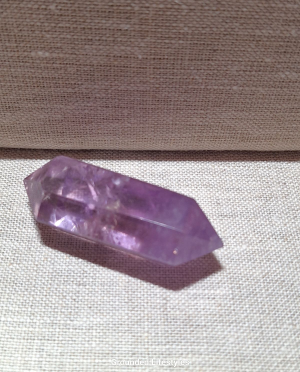
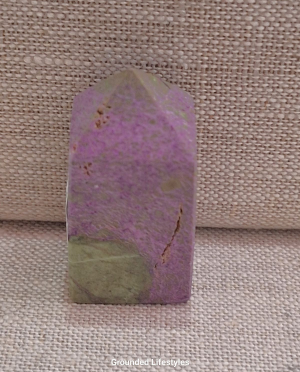
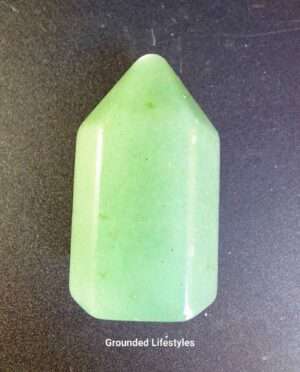
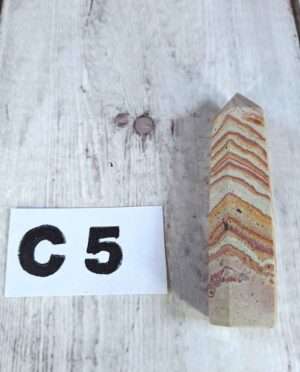
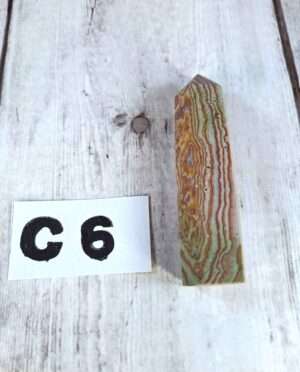
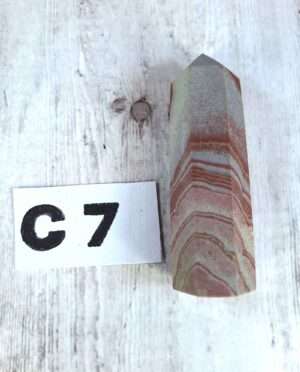
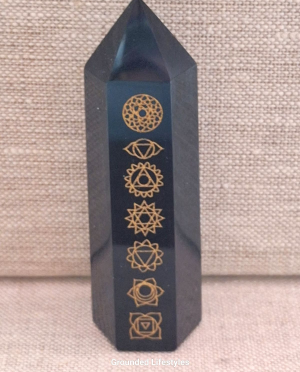
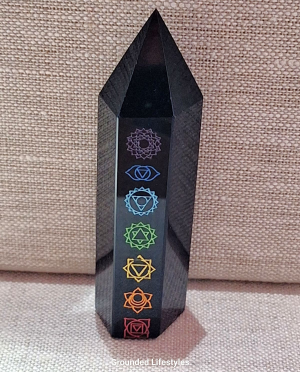
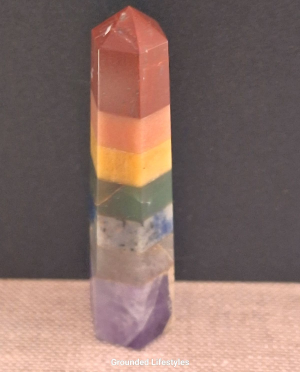
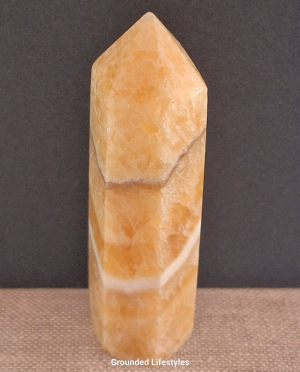
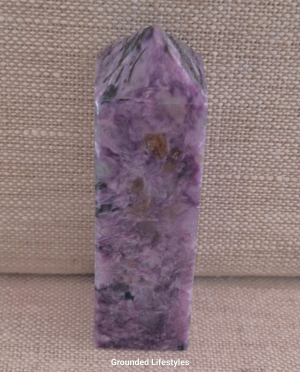
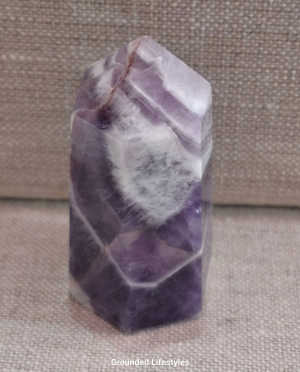
Crystal Points capture Earth’s precision and energy in its purest form. Hand-polished from natural quartz, amethyst, citrine, fluorite, and other minerals, each point embodies focus, direction, and light. Whether naturally terminated or lapidary-shaped, these towers channel energy upward — symbolizing clarity, growth, and transformation. Collectors, stylists, and energy workers alike value crystal points for their geometric beauty and powerful resonance within both science and spirit.
✨ Explore deeper knowledge in our Mine to Mind Blog
or download free resources from our E-Book Library.
Showing 1–16 of 48 results


“Crystal points” is a shape category that spans multiple minerals with very different origins. Some species (e.g., quartz) commonly form naturally terminated prisms; others (fluorite, calcite, feldspar, obsidian, zeolites) are shaped and polished to reveal architectural geometry that echoes (or contrasts) their internal structure. Below is what that means geologically—and why it matters for durability, color, and value.
Crystal system & habit. Quartz belongs to the trigonal division of the hexagonal family; classic points show a hexagonal prism with r- and z-rhombohedral terminations (the faces many collectors recognize). These faces (and the long c-axis) are why quartz points look like “arrows of light.”
Where quartz points form.
Hydrothermal veins (e.g., Arkansas Ouachita Mountains): hot silica-rich fluids fill fractures; slow cooling grows large, water-clear prisms.
Basaltic geodes (Brazil & Uruguay): gas cavities in flood basalts later fill with chalcedony → quartz → amethyst; these districts produce the world’s iconic cathedral geodes.
Color origins.
Amethyst: color centers linked to trace Fe and natural irradiation. Heating can shift violet to citrine (commonly above ~500 °C).
Citrine: truly natural citrine is uncommon; most market citrine is heat-treated amethyst—still genuine quartz, but gemologically disclosed as treated.
Collector notes. Internal phantoms, growth zoning, and fluid inclusions record pulses of growth and changing chemistry; careful lighting reveals rainbows and “ghost” outlines that authenticate natural history. (See our Blog: Crystal Systems Explained.)
Geology. Fluorite (CaF₂) often forms in hydrothermal veins and MVT-style carbonate-hosted systems; it’s a classic gangue mineral in F-Ba-Pb-Zn districts.
Color physics. Many colors arise from electron color centers (F-centers/M-centers) created by irradiation or defects—hence the incredible palette and zoning seen in polished towers.
Lapidary durability. Perfect octahedral cleavage means sharp tips chip more easily than quartz; quality towers keep slightly broader apices and thicker edges for stability.
Geology. Calcite precipitates from low-temperature hydrothermal fluids and sedimentary waters; dogtooth spar and scalenohedral crystals can be natural “point-like,” but most towers are carved.
Durability. Prominent rhombohedral cleavage demands gentle handling and conservative facet angles; expect satin-to-gloss polishes rather than glassy quartz-like luster.
Geology & optics. Labradorite is a plagioclase feldspar from igneous bodies. Its famed labradorescence comes from sub-microscopic exsolution lamellae (thin alternating layers) that diffract light—why oriented faces “flash.”
Lapidary note. To maximize color play, cutters orient towers so the lamellae strike the surface at angles that yield vivid blues/greens; edges are kept thicker to protect against feldspar’s cleavage.
Geology. Obsidian is natural volcanic glass—a super-silicic melt quenched so fast it lacks a crystal lattice.
Durability & finish. With conchoidal fracture and Mohs ~5–5.5, obsidian takes a mirror polish but needs blunter tips than quartz; it can chip if the apex is too acute.
Geology. Zeolites like scolecite grow as acicular sprays in basalt cavities (the same volcanic plumbing that yields many Indian cabinet specimens). Any “tower” look is artisan-cut from massive material or composite with bases.
Care. Lower hardness and perfect cleavage in some zeolites call for gentle cleaning and low-stress display.
Our crystal points are sourced from mineral-rich regions around the world:
Brazil: Renowned for optical-grade clear quartz, amethyst, and citrine points with natural terminations.
Madagascar: Home to flower agate, rose quartz, and labradorite — each point glowing with soft internal light.
India: Known for aventurine, scolecite, and other stones shaped by skilled lapidary artisans.
China: Fluorite and calcite points displaying intricate zoning and vivid coloration.
United States: Quartz from Arkansas and obsidian from Oregon highlight domestic mineral diversity.
Crystal points are admired for their natural symmetry and optical brilliance. Each polished surface acts as a mirror for light, while internal inclusions reveal the story of geological evolution.
Display Aesthetics: Points arranged in ascending height create striking skyline formations — ideal for minimalist or bohemian décor.
Lighting: LED backlighting reveals internal rainbows and inclusions.
Pairings: Combine with copper, hematite, or smoky quartz to create a dynamic balance between grounding and ascension.
Collectors appreciate both naturally terminated and hand-polished examples — each offering a unique bridge between art and geology.
Crystal points are tools of focus and transformation. In feng shui, they are placed in the Wealth or Health sectors to lift stagnant energy. In meditation, they are used to channel energy toward intentions or to anchor balance within a space.
When used in grid layouts, points serve as directional amplifiers, sending or receiving energy where it is most needed. Their upward motion mirrors human aspiration — grounding intention while inviting clarity from higher planes.
In metaphysical tradition, crystal points serve as amplifiers and directors of energy. Their shape naturally channels frequency — much like a conductor focuses sound waves.
Single-Terminated Points: Radiate energy in one direction, ideal for intention work and cleansing rituals.
Double-Terminated Points: Balance and circulate energy, fostering harmony between mind and environment.
Clusters of Points: Symbolize collective consciousness and group intention, often used in healing rooms or meditation spaces.
Crystal points are often placed in homes or workspaces to encourage mental clarity, creativity, and focus. Many practitioners align them with copper or selenite bases to enhance energy conductivity and grounding.
✨ Learn More:
Experience the wonder of crystals, minerals, and fossils firsthand at our Arizona marketplace booths and seasonal gem shows. Each event brings the beauty of our online collection to life — with exclusive specimens, show specials, and one-of-a-kind artisan pieces you won’t find anywhere else.
✨ Meet Us at Local Markets & Shows
Join us at Anthem Market in the Park, Clarkdale Market, and Westgate Entertainment Artisan Alley — or explore our full schedule on the Events Hub.
Each event listing includes dates, maps, and featured products so you can plan your visit and shop in person.
🪶 Shop at Our Booth Locations Across Arizona
Find Grounded Lifestyles displays in West Sedona, Prescott, and Payson — each booth curated with local favorites and collector’s pieces from our online store.
Visit our Store Booth Locations page for current hours, directions, and featured inventory.