
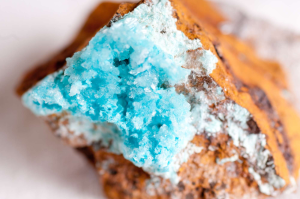
Mohs Scale
Learn the Mohs Hardness Scale, scratch test methods, and gemstone hardness chart to identify crystals and understand mineral durability.
Our Minerals blog explores the science and spirit of crystals — from quartz and calcite to jade and rare gem minerals. Articles cover geology, Mohs hardness, and crystal formation alongside metaphysical meanings and practical uses. Each post helps collectors, healers, and design enthusiasts discover the beauty, rarity, and energy of Earth’s most captivating stones.
Many of the minerals discussed here — from sparkling quartz clusters to rare specimens — can also be found in our online store. For those who enjoy exploring in person, you can connect with us at our store booth locations in Sedona, Prescott, and Payson, or at one of the 30+ gem and mineral shows and Arizona marketplace events we attend annually across the Southwestern United States.
For readers who want to go deeper, our Free E-Book Library offers subscriber-only guides on crystal care, formation science, feng shui, and collector’s insights — designed to expand on the knowledge introduced in this category.
The Minerals blog is your cornerstone hub for understanding crystals from every perspective — geological, metaphysical, and lifestyle — making it the perfect resource for both seasoned collectors and those just beginning their journey.
Learn the Mohs Hardness Scale, scratch test methods, and gemstone hardness chart to identify crystals and understand mineral durability.
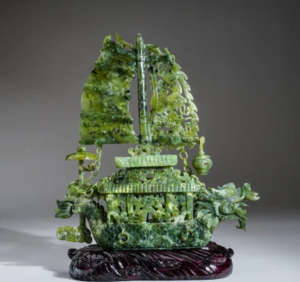
Discover the timeless beauty and cultural significance of jade, a gemstone cherished for centuries as a symbol of purity, wisdom, and protection. Learn the differences between nephrite and jadeite, how jade forms deep within the Earth, its role in ancient civilizations, and the treatments that affect its value. Explore how
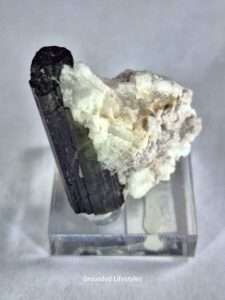
Tourmaline is one of the most diverse mineral groups on Earth—rich in color, chemistry, and geologic history. From vivid rubellite and neon Paraíba to grounding black tourmaline, this complex borosilicate forms in rare pegmatites and metamorphic zones worldwide. This in-depth guide explores its formation, varieties, grading, localities, metaphysical insights, collecting
Minerals are the fundamental building blocks of Earth’s crust, each defined by a unique chemical composition and crystal structure. More than 5,800 minerals are recognized by the International Mineralogical Association (IMA), and each specimen tells a story of geologic processes:
Igneous minerals crystallize from cooling magma (e.g., quartz, feldspar, olivine).
Metamorphic minerals form under heat and pressure, creating gems like garnet, staurolite, and kyanite.
Sedimentary minerals precipitate from water, such as calcite, gypsum, or halite.
Minerals are classified by their chemical families, such as silicates (the most abundant), carbonates, oxides, sulfides, and phosphates. Their diversity drives not only geology and industry (copper, iron, lithium) but also collecting and metaphysical practices.
The science of crystal systems also underpins both aesthetics and metaphysical symbolism. Cubic (pyrite), hexagonal (beryl), and trigonal (quartz) systems determine growth habits and symmetry — factors that collectors, designers, and healers all notice when appreciating specimens.
Minerals occur worldwide, and certain localities are famous for their quality, rarity, and historical significance.
Brazil → Tourmaline, quartz varieties (amethyst, citrine, smoky), and aquamarine, often cut into large freeforms or cathedral clusters for décor.
Madagascar → Labradorite, rose quartz, and fossil wood polished into spheres, slabs, and display pieces.
Himalayan Region (India, Pakistan, Nepal, Tibet) → Clear quartz, aquamarine, and phenakite, often collected for both their clarity and high-altitude formation.
United States → Arizona (copper minerals like malachite and azurite), Arkansas (world-class quartz crystals), Colorado (rhodochrosite from Sweet Home Mine).
Russia → Shungite (Karelia), demantoid garnet (Urals), charoite (Siberia).
Morocco → Vanadinite, barite, azurite, and vibrant fossil-mineral combinations. Moroccan minerals are staples at gem shows and are styled into fossil tables, vanadinite clusters, and display cabinets.
Afghanistan → Lapis lazuli (used since antiquity in jewelry and pigments), aquamarine, kunzite, and tourmaline.
Australia → Opal (national gemstone), chrysoprase, and boulder opal for both jewelry and collectors.
Africa (Namibia, South Africa, Congo) → Dioptase, pietersite, sugilite, vibrant fluorite, and high-quality copper minerals.
Additional Global Mineral Localities
China → Famous for fluorite (often in large cubic crystals), stibnite, cinnabar, and pyromorphite. Many specimens are highly aesthetic and dominate international gem and mineral shows.
Germany → A historic mineral hub, producing fluorite, barite, galena, and pyromorphite. Classic specimens from Saxony and the Black Forest shaped early mineralogy.
Mexico → Renowned for amethyst, calcite, smithsonite, wulfenite, and danburite. Mexico’s fluorite mines also produce world-class specimens in vibrant colors.
Peru → A premier source of pyrite (“Peruvian gold”), rhodochrosite, and vivianite. These specimens are popular for both their beauty and affordability.
Spain → Known for pyrite from Navajún (perfect cubic crystals), celestite, and aragonite. Spanish pyrite cubes are especially popular as both scientific specimens and décor accents.
Switzerland & Alps → Alpine cleft quartz, adularia (moonstone variety), and smoky quartz from high mountain fissures prized by collectors worldwide.
Canada → Produces ammolite (a fossilized ammonite gemstone), labradorite, and tourmaline. Canadian deposits tie geology with fossil heritage.
Each locality contributes more than just specimens — it adds a story of geology, culture, and trade history, making minerals both globally significant and personally meaningful for collectors and designers alike.
Collecting minerals blends science, aesthetics, and responsibility. Whether you’re a beginner selecting tumbled stones or a seasoned collector pursuing museum-quality specimens, understanding the nuances of collecting is key to building a meaningful and lasting collection.
1. Authenticity & Sourcing
Common treatments → Many minerals are altered to enhance appearance: heat-treated citrine, dyed quartz, stabilized turquoise, and aura coatings on quartz. Collectors should know the difference between natural and enhanced specimens.
Synthetic & lab-grown crystals → Synthetic quartz, beryl, and even diamonds exist. While valuable for industry, they lack the natural story of geological formation. Clear provenance is critical.
Ethical sourcing → Collectors increasingly value minerals mined with fair labor and environmental practices. Provenance from reputable dealers builds confidence and long-term value.
2. Collecting Strategies
Beginner focus → Start with accessible species (quartz, calcite, fluorite, pyrite) in small display sizes. These teach crystal systems, hardness, and luster without overwhelming cost.
Intermediate approach → Seek locality-specific specimens — like wulfenite from Arizona or rhodochrosite from Peru — to learn regional mineralogy and add rarity.
Advanced collecting → Pursue scarce species (grandidierite, benitoite, painite) or flawless crystal habits. Museum-quality specimens are prized for symmetry, color saturation, and preservation.
3. Display & Preservation
Display techniques → Acrylic bases, risers, and LED lighting highlight clarity and form. Rotating stands can emphasize terminations or rainbows in quartz.
Environmental care →
Light-sensitive minerals (amethyst, celestite, kunzite) fade in direct sunlight.
Moisture-reactive minerals (halite, pyrite, marcasite) require low-humidity storage.
Fragile specimens (gypsum, vanadinite) should be stabilized or stored under glass.
Labeling & records → Serious collectors catalog specimens with mineral name, locality, and acquisition date. Documentation preserves scientific and market value.
4. Market & Value Factors
Rarity — Some minerals, like alexandrite or jeremejevite, are scarce in nature and highly sought after.
Aesthetics — Symmetry, luster, color saturation, and crystal habit define desirability.
Locality prestige — Minerals from classic localities (Colorado rhodochrosite, Chinese fluorite, Spanish pyrite, Afghan lapis lazuli) command premium prices.
Size vs. quality — Large specimens are impressive, but pristine small crystals can be equally valuable. Perfection often trumps size.
Trends — Market interest shifts (e.g., pink fluorite, rare zeolites, or designer carving materials like chrysoprase). Staying current at shows and auctions helps collectors anticipate demand.
5. Community & Events
Shows → Tucson, Denver, Munich, and Sainte-Marie-aux-Mines are international mineral showcases where collectors, dealers, and museums converge.
Local clubs → Provide education, field trips, and beginner-friendly buying opportunities.
Networking → Relationships with dealers and other collectors provide access to rare specimens before they reach the broader market.
6. Educational & Personal Value
Collecting minerals builds knowledge of geology, chemistry, and world geography. Each piece connects to a specific time and place in Earth’s story.
Many collectors describe their cabinets as “living museums”, where aesthetic beauty and natural science meet.
Beyond monetary value, minerals are objects of personal inspiration, mindfulness, and creativity.
Minerals play a dual role — as scientific specimens and as symbols of energy, intention, and design. While metaphysical interpretations vary, their frequencies and colors make them powerful tools in both energy work and interior styling.
Quartz (Clear, Smoky, Rose, Amethyst) → Considered the “master crystal family,” quartz amplifies energy, clears environments, and adapts to intention. In décor, large quartz clusters act as radiant room anchors.
Selenite → Known as a purifier and light-bringer, selenite towers and lamps are styled in wellness spaces to symbolize clarity and flow.
Black Tourmaline → Used for grounding and energetic protection, often placed near doorways or in workspaces. Its dark luster also provides striking contrast in minimalist or modern design.
Fluorite → Associated with clarity and focus, making it popular for study spaces or offices. Its banded colors add natural artistry to shelves and desks.
Lapis Lazuli → Long revered as a stone of wisdom and royalty, styled as polished décor or jewelry to invoke heritage and depth.
Dioptase & Malachite → Vivid greens tied to abundance, growth, and heart energy, perfect for creative or communal spaces.
Amber & Petrified Wood → Fossil minerals symbolizing preservation, grounding, and ancestral connection — styled as statement décor or accent pieces.
Styling principles:
Pair light and dark minerals (selenite + black tourmaline) for both energy balance and visual harmony.
Use clusters and geodes as natural sculptures, highlighting geometry and color.
Incorporate minerals into functional design — bookends, coasters, or inlays that blend beauty with practicality.
Learn even more with these resources:
Collector’s Field Guide to Authentic Crystals (Free e-Book)
Crystal Formation 101 (Free e-Book)
Crystal Home Styling Guide (Free e-Book)
Deep Dive on other great topics here:
Explore and learn more in our Mine to Mind Articles:
Crystal Healing
Lifestyle
Meteorites
Agates
Lapidary & Wire
Shop your favorites!
Shop Tumbled Stones
Shop Meteorites
Shop Non Mineral Gifts
Shop Animals/Figurines
Shop Copper